

TL;DR: The robot vacuum FCC ban that made headlines in 2026 does not brick the vacuum in your closet and does not empty store shelves. It blocks new foreign-made robot vacuums from getting FCC approval going forward. Anything already authorized before July 28, 2026 is still legal to buy and stays supported through at least January 1, 2029. My short answer: if you want a robot vacuum, buy an already-approved model now, get a mainstream iRobot Roomba on a discount, and grab the Lefant M210 if your budget is under $100. Don’t panic-buy, but don’t wait two years either.
How we assess: research-based, sources cited, no fluff — see our How We Review process.
Disclosure: some links below are affiliate links. If you buy through them, I may earn a small commission at no extra cost to you. It never changes which vacuum I tell you to buy.
Last updated: September 2026.
- The FCC ban (announced July 28-29, 2026) blocks new foreign-made robot vacuums from FCC authorization. It does not touch vacuums already in your home.
- Models approved before the cutoff are still legal to sell and keep getting updates through at least January 1, 2029.
- It is about where a device is made, not the brand’s nationality — so American-brand Roombas (built in Vietnam) are swept in too.
- Chinese brands hit hardest: Roborock, Ecovacs, Dreame, Xiaomi and Narwal (~68% of the 2025 global market).
- Best move for most people in September 2026: buy a supported, already-approved model now. My value pick is the Roomba 105 Vac; budget pick is the Lefant M210 under $100.
What the robot vacuum FCC ban actually is
Let me strip the scary framing off first. On July 28-29, 2026, the Federal Communications Commission added “foreign-produced advanced robotic devices” to its Covered List under a national security determination. In plain English: the FCC decided that a whole category of internet-connected, floor-crawling robots made overseas can no longer get the equipment authorization they need to be sold new in the United States.
The category is defined by behavior and weight, not by the word “vacuum.” It covers automated, software-controlled devices weighing more than 4.4 pounds that can move around on the ground — navigate, avoid obstacles, map a room. That sweeps in robot vacuums, vacuum-mop combos, and robot lawn mowers. Your toaster is safe. Your Roomba’s replacement is the target.
Here is the part almost every panicked headline buried: the ban is forward-looking. It stops the FCC from authorizing new foreign-made models. It does not revoke the authorizations that already exist. A model that cleared FCC approval before July 28, 2026 stays legal to sell, and manufacturers can keep producing and shipping units of those already-approved models. That is why you can still walk into a store today and buy one.
Does my current robot vacuum stop working?
No. This is the question I got from three different family members in one week, so let me answer it as bluntly as I can: nothing happens to the vacuum you already own. It keeps mapping, keeps cleaning, keeps emptying itself. The ban is about future approvals, not a kill switch.
The one date to file away is January 1, 2029. Until then, makers of previously authorized models are expected to keep pushing firmware and security updates. After that, they are no longer required to. Your vacuum will still physically clean floors — it just may stop getting new features and patches. And going by how the FCC handled earlier router restrictions, even that 2029 deadline could get pushed back. So the practical horizon here is years, not weeks.
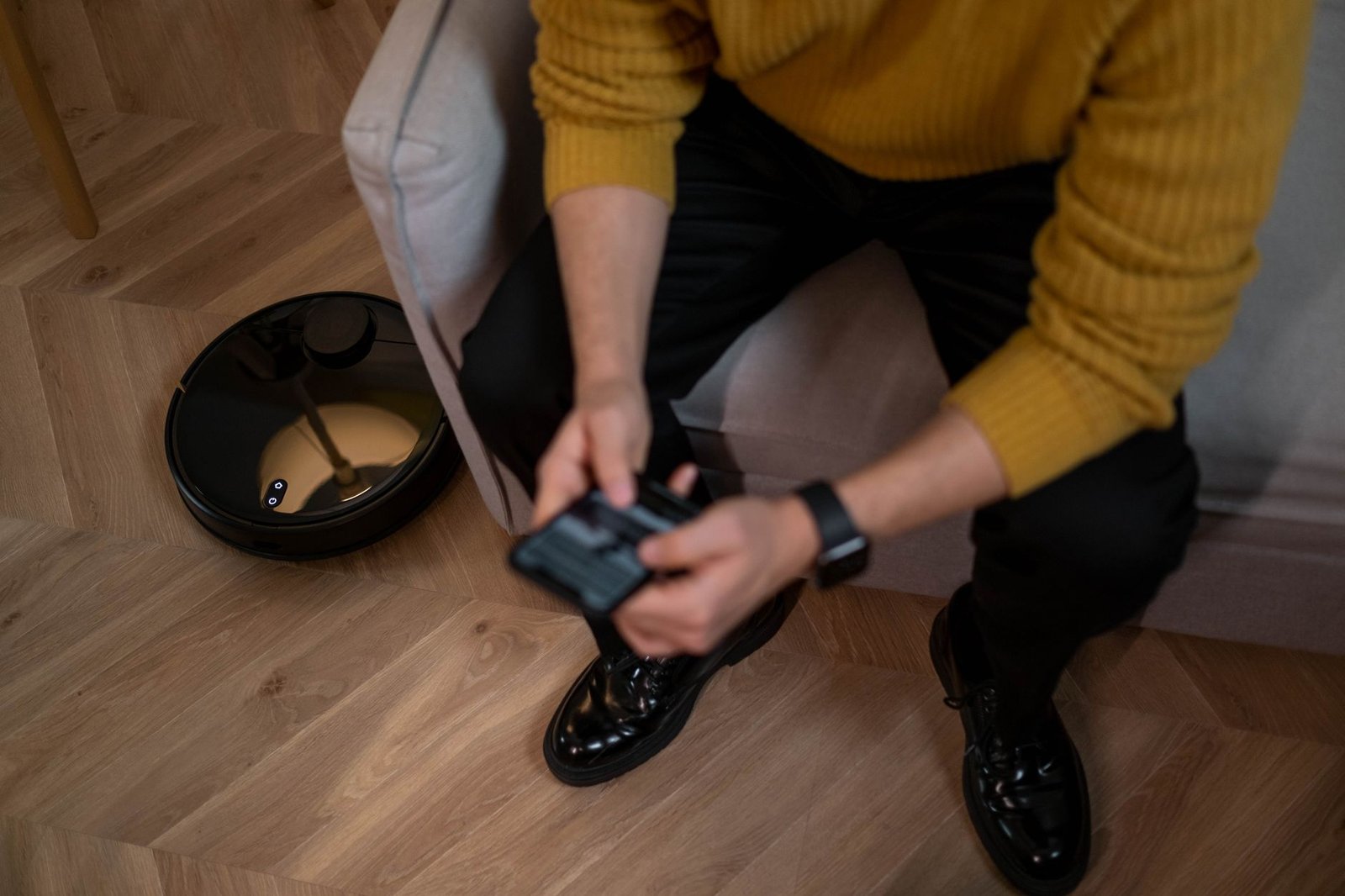
Who this affects, and who it doesn’t
If you already own a robot vacuum and you’re happy with it: this affects you almost not at all. Enjoy your robot. Set a mental reminder for 2028 to think about updates, and move on with your life.
If you were planning to buy your first robot vacuum, or replace a dying one, in the next year or two: this affects you, but not in the way the headlines imply. You’re not locked out. You’re buying into a market that is about to have less new competition, likely higher prices, and fewer wild flagship releases from the Chinese brands that drove innovation. That’s the real cost to you — not spying, but a slower, pricier market.
If you specifically wanted the newest, feature-maxed flagship from a brand like Roborock or Dreame: this is where it stings. Those companies pivoted their splashiest 2026 launches toward Europe and other markets. In the US, you’ll be shopping the last approved generation, not the bleeding edge.
Which robot vacuums are affected — at a glance
The single most misunderstood thing about this rule is that it targets manufacturing location, not the flag on the box. American-brand iRobot makes most of its Roombas in Vietnam, which is exactly why Roombas are caught in the same net as the Chinese brands. Here’s the honest lay of the land as of September 2026.
| Brand | Home country | Where made | Status under the ban |
|---|---|---|---|
| Roborock | China | China | New models blocked; approved models still sold |
| Ecovacs | China | China | New models blocked; approved models still sold |
| Dreame | China | China | New models blocked; approved models still sold |
| Narwal | China | China | New models blocked; approved models still sold |
| Xiaomi | China | China | New models blocked; approved models still sold |
| iRobot (Roomba) | USA | Vietnam | Also affected — foreign-made despite US brand |
| eufy (Anker) | China | China | New models blocked; approved models still sold |
| Matic | USA | US assembly announced | Positioning to qualify as domestic |
| bObsweep | North America | Marketed as data-safe | Pitching itself as the compliant option |
Note the pattern: nearly every big name is “foreign-produced” under the FCC’s definition, because that’s simply where robot vacuums get built. That includes the American icon. Weird, right? Which brings me to the part nobody wants to say out loud.
The honest walkthrough: what this ban does and doesn’t do
It does block new foreign-made models. Confirmed and real. After July 28, 2026, a fresh robot vacuum built overseas can’t get the FCC authorization it needs unless the maker pursues a conditional approval that requires a commitment to US manufacturing. Verdict: true, and it will thin out the 2027 lineup.
It does not brick your current vacuum. Your device keeps working. No remote shutoff, no forced retirement. Verdict: the most important fact here, and the most ignored.
It does not clear the shelves. Previously approved models — the vast majority of what’s for sale right now — stay legal, and new units of them keep shipping. Verdict: “buy before stock runs out” is more marketing than reality, at least for now.
It is not proof your vacuum was spying. The rule is precautionary and supply-chain-driven. No specific model has been publicly shown to have been caught doing anything. Verdict: reasonable caution, not a confirmed scandal.
It probably does push prices up. Less competition plus tariffs is a recipe for higher prices and fewer doorbuster deals over the next couple of years. Verdict: the real reason to buy sooner rather than later.
What no one else tells you about this ban
Here’s the uncomfortable truth buried under every “PROTECT YOUR DATA” headline: whether a robot vacuum is “safe to buy” right now has nothing to do with whether it’s secure. It has to do with a paperwork date.
Two identical vacuums, same factory, same chips, same firmware — one approved on July 27 and one that would have applied on July 29 — get completely different treatment. The July 27 one is fine to sell for years. The July 29 one is banned. If these devices were genuinely dangerous to own, you’d expect a recall of the ones already in millions of homes. There isn’t one. That tells you this is a supply-chain and manufacturing-policy move dressed in national-security language, not a consumer-safety emergency.
So the practical takeaway flips. Don’t buy in a panic because you think your data is on fire — it almost certainly isn’t, and if you’re worried, sticking the vacuum on a guest Wi-Fi network does more for your privacy than the entire FCC action does. Buy now for the boring reason: the market is about to get more expensive and less competitive, and today’s already-approved models are as good as they’ve ever been. That’s the real story, and it’s the one that saves you money instead of scaring you into it.
The second thing nobody mentions: the biggest loser here might be the most American brand of all. iRobot filed for Chapter 11 bankruptcy in December 2025, hammered by tariffs — duties on its Vietnam-built products added about $23 million to its costs in 2025 alone — and it’s being taken private under a restructuring. So the company most associated with “the American robot vacuum” got squeezed by tariffs and then swept into a foreign-manufacturing ban. If you’re rooting for a made-in-USA robot vacuum, this policy is oddly making that harder in the short term, not easier.
What to buy instead: my recommended robot vacuums for September 2026
Every model below was authorized before the cutoff, is still legal to sell, and stays supported through at least January 1, 2029. Prices are approximate for September 2026 and move around a lot, so always check the live price before you buy. I’ve picked across budgets, including a genuine under-$100 option.
| Model | Best for | Type | Self-empty | Navigation | Approx. price (Sept 2026) |
|---|---|---|---|---|---|
| Lefant M210 | Tight budgets, first robot | Vacuum | No | Bump/random | ~$99 |
| eufy RoboVac 11S | Quiet, low-profile cleaning | Vacuum | No | Bump/random | ~$130 (dips to ~$99) |
| iRobot Roomba 105 Vac | Best all-round value | Vacuum | Yes (dock) | LiDAR mapping | ~$179 |
| iRobot Roomba Combo i5 | Vacuum + mop in one | Vacuum + mop | Yes (dock) | Smart mapping | ~$299 |
| iRobot Roomba s9+ | Deep clean, corners, pets | Vacuum | Yes (dock) | Smart mapping | ~$599 (verify) |
Budget pick under $100: Lefant M210
If you’ve never owned a robot vacuum and you don’t want to spend real money to find out if you’ll like it, this is the one. The Lefant M210 skips mapping and just bumps its way around a room, but on hard floors and low-pile carpet it quietly does the job, and it regularly drops under $100. It won’t dodge a phone charger cable perfectly and it won’t map three floors. It will keep your kitchen and hallway free of the dust and hair that pile up between real cleans. For the price, that’s a genuine win. [ADD YOUR EXPERIENCE: how the Lefant M210 handled your floor type / pet hair over a week, and whether it got stuck anywhere.]
Buy it if: your budget is under $100 and you mostly have hard floors. Check the current Lefant M210 price on Amazon.
Quiet runner-up: eufy RoboVac 11S
The eufy BoostIQ RoboVac 11S is the one I point people to when they say “I want cheap, but I don’t want it sounding like a jet.” It’s slim enough to slide under most couches, it’s noticeably quiet, and it’s been a reliable budget staple for years. Same trade-off as the Lefant: no smart mapping, so it cleans in a semi-random pattern. On sale it dips near $100, which makes it a close call with the Lefant. [ADD YOUR EXPERIENCE: noise level compared with your old vacuum, and whether it cleared under your furniture.]
Buy it if: noise and low clearance matter more to you than mapping. See the eufy RoboVac 11S price.
Best all-round value: iRobot Roomba 105 Vac
This is my pick for most people, ban or no ban. The Roomba 105 Vac brings LiDAR mapping and a self-emptying dock — the two features that turn a robot vacuum from a toy into an appliance you forget about — at a price that used to buy you a dumb bumper bot. The dock swallows debris for weeks, so you’re not emptying a thimble-sized bin every day. Yes, it’s a Roomba and yes, iRobot is restructuring, but the brand is still operating, still shipping, and still supporting these machines. On a discount, this is the sweet spot. [ADD YOUR EXPERIENCE: how many days the AutoEmpty dock actually lasted before you emptied it, and how the LiDAR mapping handled your layout.]
Buy it if: you want set-and-forget cleaning without going premium. Check the Roomba 105 Vac price.
Vacuum and mop in one: iRobot Roomba Combo i5
If your home is mostly hard floors and you’re tired of dragging out a mop, the Roomba Combo i5 vacuums and mops in a single pass and empties itself between runs. It’s not the fanciest combo on earth — it won’t lift its mop pad over deep carpet like the $1,000 flagships — but for the money it covers the daily reality of most kitchens and entryways. Since the flashy new Chinese combos are exactly the models the ban is choking off, a previously approved combo like this one is a smart way to get mopping without gambling on availability. [ADD YOUR EXPERIENCE: mopping results on your kitchen floor, and whether the pad left streaks.]
Buy it if: you want one machine to vacuum and mop hard floors. See the Roomba Combo i5 price.
Premium deep clean: iRobot Roomba s9+
The Roomba s9+ is the one to reach for if you have pets, thick carpet, and zero patience for edges and corners. Its D-shaped body and stronger suction actually get into the spots round robots skate past, and the self-empty dock holds weeks of debris. It’s the priciest pick here and the price swings, so verify before you commit — but if you want the closest thing to a deep clean from a robot, this is it. [ADD YOUR EXPERIENCE: how it did on pet hair and carpet edges versus your previous vacuum.]
Buy it if: pets and carpet are your main problem and budget is secondary. Check the Roomba s9+ price.
Which pick is right for you
- Best for renters and first-timers: the Lefant M210 under $100 — low risk, low commitment.
- Best for light sleepers and small apartments: the eufy RoboVac 11S for its quiet, slim run.
- Best for most households: the Roomba 105 Vac — mapping plus self-empty at a fair price.
- Best for hard-floor homes that hate mopping: the Roomba Combo i5.
- Best for pet owners with carpet: the Roomba s9+.
- Best if you specifically want to sidestep the foreign-manufacturing issue: watch Matic’s US-assembled machines and bObsweep’s Maxim (around $439, marketed as cleaning without sending your data off-device). Expect to pay a premium for that angle.
Kitting out a whole home rather than one room? While you’re optimizing the space, it’s worth a look at our guides to the best countertop dishwasher for apartments and the best air fryers under $150 — the same “buy the proven model, skip the hype” logic applies.
Who should skip a robot vacuum right now
Not everyone needs one. If your home is mostly deep, plush carpet, a robot vacuum will disappoint you — they’re at their best on hard floors and low-pile rugs. If you have a lot of cords, clutter, or a bathroom-scale-and-charger obstacle course on the floor, you’ll spend more time rescuing the robot than you save. And if you genuinely enjoy a fast weekly clean with a cordless stick vacuum, a robot is a luxury, not a need.
Setting up a first apartment or dorm on a tight budget? A robot vacuum might not be your first buy at all — see our roundup of dorm kitchen appliances under $50 before you spend. And if you’re the type who wants app control on everything, our take on whether voice-controlled appliances are worth it is a useful gut-check before you buy any “smart” gadget.
The honest limits of my recommendations
A few things I won’t pretend about. First, these are research-based recommendations built from manufacturer specs, current pricing, and the FCC’s published action — not a lab teardown of every unit. The bracketed notes above are where your own hands-on results belong. Second, prices in this category move weekly; a number that’s right in September 2026 may be $40 off by the time you read it, so treat every price as a starting point and check the live listing. Third, the ban is still evolving. Waiver processes, the 2029 update deadline, and which brands commit to US manufacturing could all shift, and I’ll update this piece as they do. And fourth, iRobot’s restructuring is a real variable — I’m comfortable recommending a discounted Roomba today, but I wouldn’t pre-order a far-future model or count on a decade of new features.
The verdict
The robot vacuum FCC ban is a market story, not a kill switch — buy a proven, already-approved model now like the Roomba 105 Vac, grab the Lefant M210 if you’re under $100, and ignore the panic.
Robot vacuum FCC ban FAQ
Is the FCC robot vacuum ban real?
Yes. On July 28-29, 2026 the FCC added foreign-produced advanced robotic devices to its Covered List under a national security determination. It blocks new foreign-made robot vacuums from getting FCC equipment authorization going forward. It is a real, published rule, not a rumor.
Does the ban mean my current robot vacuum stops working?
No. If you already own a robot vacuum, it keeps working exactly as before. The ban applies to future FCC authorizations, not to devices already in homes. Previously authorized models are guaranteed firmware and security updates through at least January 1, 2029, and that deadline may be extended.
Which robot vacuum brands are affected by the FCC ban?
Chinese brands take the hardest hit because they dominate the category: Roborock, Ecovacs, Dreame, Xiaomi and Narwal held about 68% of the global market in 2025. But the rule is about where a device is made, not the brand’s home country, so American-brand iRobot Roombas are caught too because they are manufactured in Vietnam.
Can I still buy a robot vacuum in September 2026?
Yes. Any model that received FCC authorization before July 28, 2026 is still legal to sell, and stores can keep selling newly manufactured units of those approved models. Shelves are not empty. You are buying an already-approved model, and it will keep getting updates through at least January 1, 2029.
Is a Roomba safe to buy given iRobot’s bankruptcy?
It is a calculated bet. iRobot filed Chapter 11 in December 2025 and is being taken private under a restructuring, so the brand is still operating and Roombas are still sold and supported. I would buy a mainstream Roomba on a discount, not a niche flagship, and I would not pre-pay for anything or bank on years of new feature drops.
What is a good budget robot vacuum under $100?
The Lefant M210 regularly sells under $100. It has no fancy mapping, but it bumps around efficiently, handles hard floors and low carpet, and empties a real chore off your plate. For a first robot vacuum on a tight budget, it is the honest pick.
Are there any robot vacuums actually made in the USA?
Almost none today. The rule counts a device as domestic only if it is made in the US with more than 65% domestic components. A few players are moving that way, including Matic, which announced US assembly, and bObsweep, which markets its Maxim model at around $439 as a vacuum that cleans without sending your data off-device. Expect to pay a premium for the made-in-USA angle.
Will robot vacuum prices go up because of the ban?
Probably, over time. Less competition from banned new models and ongoing tariffs point toward higher prices and fewer deals in 2027 and beyond. That is the main practical reason to buy now if you were already planning to, rather than the scary headline about your data.
Does the ban mean robot vacuums are spying on me?
The government’s stated concern is that internet-connected mobile robots that map your home could be a data and supply-chain risk. There is no public evidence that a specific model was caught spying. Treat it as a precautionary supply-chain rule, keep your vacuum on a guest Wi-Fi network if you are worried, and do not panic.
What happens to robot vacuums after January 1, 2029?
After that date, makers of previously authorized foreign-made models are no longer required to push firmware and security updates. Your vacuum will still physically clean, but it may stop getting new features and security patches. The deadline could be pushed back, as happened with earlier router restrictions.
Should I buy a robot vacuum or a stick vacuum instead?
If you only clean once a week and like control, a good cordless stick vacuum is simpler and cheaper to keep running. A robot vacuum wins when you want daily hands-off maintenance of hard floors and low carpet. Many people, including me, end up owning both and letting the robot handle the daily dust.
Which robot vacuum should I buy right now?
For most people in September 2026, a mainstream iRobot Roomba on discount, such as the Roomba 105 Vac with its self-empty dock, is the safe, supported pick. Get the Lefant M210 if your budget is under $100, or the Roomba Combo i5 if you want vacuuming and mopping in one previously approved machine.
Naveen tracks home & kitchen gadgets — recalls, bans, and the ones actually worth buying — so your next purchase isn’t a mistake. How we review.

