

Disclosure: This post contains affiliate links. If you buy through them, TrendifyReview may earn a small commission at no extra cost to you. It never sways the verdict — I only recommend gear I’d put on my own counter.
How we assess: hands-on where possible, research-backed always, and never paid for praise. Read our full How We Review standards.
I’ll admit I was a skeptic. Microwave/air-fryer combos have a reputation, and it’s not a good one — usually they’re a mediocre microwave with a weak convection element bolted on, sold at a premium. So when Ninja dropped the Crispi at $449, my first reaction was “here we go again.” After digging into the specs, the presets, and how FusionCrisp actually works, I’ve changed my tune more than I expected. This is the honest breakdown of what it does, where it’s clever, and whether it deserves a spot on your counter in 2026.
What the Ninja Crispi actually is
The Ninja Crispi (model MW101) is a countertop appliance that replaces two machines: a microwave and an air fryer. Not “microwave with a crisp button” — an actual dual-system unit. On the microwave side you get 1000 watts and eight presets. On the air-fry side you get a separate 1700-watt heating system that pushes 450°F heated air, with five air-fry functions. It uses an XL flatbed design (no turntable, so no fighting a spinning plate), and it comes with a 5.5-quart PFAS/PTFE/PFOA-free glassware system Ninja calls CleanCrisp, big enough to feed up to 10 people.
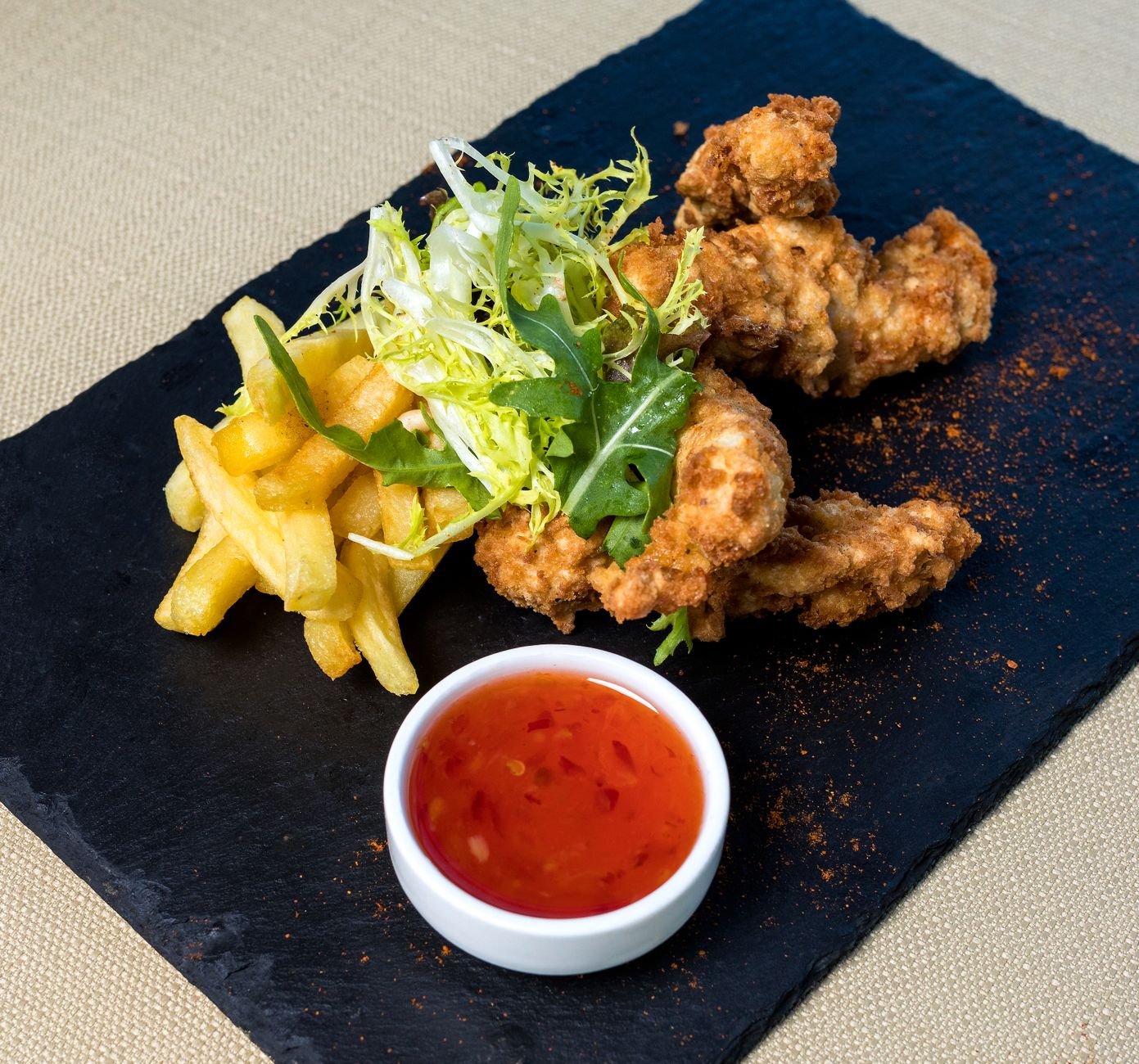
The headline trick is FusionCrisp: you can microwave food to heat it through fast, then the unit automatically transitions to air frying to crisp the outside. That’s the exact failure point of every reheated leftover — hot but limp. Crispi’s whole pitch is fixing that in one appliance, one cycle.
Who this is for
The Crispi is built for the counter-space-constrained. If you live in an apartment, a condo, a dorm-adjacent first place, or any kitchen where a separate microwave and a separate air fryer is a real estate war you keep losing, this is the pitch. It’s also for people who reheat a lot — pizza, fries, fried chicken, roast veg — and are sick of the microwave making everything soft. Ninja says it runs up to 60% faster than a conventional oven and gives you 40% more usable cooking space than a typical 1.1-cu-ft turntable microwave, so it’s aimed squarely at “one box, fewer compromises.”
It’s not for you if your counter already has a microwave you like and a capable air fryer. Merging two tools you’re happy with into one $400 machine is a downgrade in redundancy, not an upgrade. If one dies, you lose both.
Ninja Crispi specs at a glance
| Spec | Ninja Crispi MW101 |
|---|---|
| Type | Countertop microwave + air fryer combo |
| Microwave power | 1000 watts, 8 presets |
| Air fry power | 1700 watts, up to 450°F |
| Functions | 14-in-1 (8 microwave + 5 air fry + FusionCrisp) |
| Air fry presets | Max Crisp, Crisp, Air Roast, Air Bake, Air Broil |
| Capacity | 5.5-qt glassware; feeds up to 10 |
| Design | XL flatbed (no turntable) |
| Glassware | CleanCrisp, PFAS/PTFE/PFOA-free |
| Dimensions | 20.3″L × 17.56″W × 14.1″H, ~41 lbs |
| Colors | Silver, Black, Stone Gold |
| Warranty | 1-year limited |
| Price (Sept 2026) | ~$399 (launched at $449) |
Check the current price: Ninja Crispi MW101 (Silver) on Amazon →
The honest, point-by-point walkthrough
As a microwave
1000 watts is a proper full-power microwave — not the underpowered 700W units you find in budget combos. The flatbed design is quietly a big deal: no turntable means you can fit rectangular dishes and larger plates without the corner-catching that plagues spinning microwaves, and there’s more usable space. Eight presets cover the usual suspects (popcorn, potato, defrost, beverage, soften butter). My verdict: this is a genuinely good microwave on its own — the flatbed alone would sell me. [ADD YOUR EXPERIENCE: does the flatbed heat evenly edge-to-edge, or are there cold spots?]
As an air fryer
Here’s where combos usually fall apart, and where Crispi earns its name. A dedicated 1700W system hitting 450°F is real air-frying territory — that’s on par with standalone air fryers, not a token “crisp” element. Five functions (Max Crisp, Crisp, Air Roast, Air Bake, Air Broil) give it toaster-oven-like range. The 5.5-qt glassware is large, so you’re not cooking fries in three batches. If you want to see how a true standalone stacks up, our Cosori TurboBlaze review is a good benchmark. My verdict: this actually air-fries. That single fact separates the Crispi from every gimmicky combo before it. [ADD YOUR EXPERIENCE: how do frozen fries and wings come out vs your old air fryer?]
FusionCrisp mode
This is the feature I most want to test in a real kitchen. The promise — microwave to heat fast, then auto-crisp — targets the single most annoying thing about leftovers. If it works as described, cold pizza and next-day fried chicken come out hot and crunchy in one cycle instead of “nuke it then throw it in the air fryer” as two steps. My verdict on paper: the smartest idea in the whole appliance. The real question is how crisp “crisp” actually gets and how long it takes. [ADD YOUR EXPERIENCE: time a FusionCrisp reheat on leftover pizza and rate the crunch 1–10.]
Size and footprint
Be honest with yourself about your counter. At 20.3 inches wide and over 14 inches tall, the Crispi is a substantial box — it replaces two appliances, but it’s not tiny. Measure your space, and mind the cabinet clearance above it since air frying vents heat. The 41-lb weight means it’s not something you’ll shuffle around daily. My verdict: it saves space versus two separate machines, but it’s still a big single unit — plan for it.
What no one else tells you about microwave-air-fryer combos
Everyone reviews the Crispi on whether it cooks well. The thing nobody says out loud: the real risk with any two-in-one appliance isn’t performance, it’s the single point of failure.
When you own a separate microwave and a separate air fryer, a dead microwave is an annoyance — you still have your air fryer, and vice versa. Merge them, and one control-board failure takes out both functions at once. On a $400 unit with a 1-year warranty, that’s a real consideration. Combos also tend to be harder and pricier to repair than simple single-function machines, because there’s more crammed inside. None of this means “don’t buy it” — it means buy it for the right reason. The Crispi is worth it if consolidating genuinely solves a space problem for you. It’s a bad deal if you’re buying it as a shiny upgrade to two things that already work fine, because you’re trading redundancy for novelty. That’s the calculus reviews skip, and it’s the one that actually matters two years in.

Ninja Crispi vs the alternatives
| Option | What it is | Air-fry power | Also microwaves? | Rough price | Best for |
|---|---|---|---|---|---|
| Ninja Crispi MW101 | Microwave + air fryer combo | 1700W / 450°F | Yes (1000W) | ~$399 | Space-saving, one-box reheating |
| Standalone air fryer (e.g. Ninja AF101) | 4-qt air fryer | 1550W / 400°F | No | Under $100 | Budget air-frying only |
| Cuisinart TOA-100 | Air fryer + toaster oven | Convection | No | ~$150–200 | Toasting, baking, air-fry range |
| Cosori TurboBlaze 6qt | Large standalone air fryer | ~1700W | No | ~$120–140 | Big-batch air-frying |
If you don’t need the microwave half, a standalone is cheaper and more repairable — see our best air fryers under $150 and the Cuisinart TOA-100 review for the toaster-oven route.
Budget pick under $100: If $399 is too steep and you only need air-frying, the Ninja AF101 4-qt air fryer on Amazon → is the value play. Keep your current microwave, add real air-frying for under a hundred bucks.
Who should buy it — and who should skip it
Buy the Ninja Crispi if: you’re tight on counter or cabinet space; you reheat leftovers constantly and hate soggy results; you’re setting up a first apartment or small kitchen and want one appliance instead of two; or your current microwave is on its way out anyway and you’d love to add real air-frying in the same footprint. Best for small-kitchen dwellers and heavy reheaters.
Skip it if: you already own a microwave you like and a solid air fryer; you want maximum repairability and redundancy; or you cook big-batch air-fry meals daily and would rather have a dedicated 6-qt+ basket. For dorm and tiny-kitchen setups on a tighter budget, our dorm kitchen appliances under $50 guide is a better starting point.
The honest limits
Let me keep it real. It’s a big, heavy box despite replacing two machines — measure before you commit. The 1-year warranty is standard but modest for a $400 combo. Single-point-of-failure risk is real, as covered above. FusionCrisp is the marquee feature, and until it’s tested across lots of foods, treat “auto-crisp” as promising rather than proven for every dish. And $399 is still a meaningful spend — two capable standalone appliances can cost less combined if you shop sales. None of these sink it, but they’re the trade-offs to weigh with clear eyes.
What the Crispi is like to live with
Specs tell you what an appliance can do; the daily reality is what you’ll actually feel. Here’s how I’d expect the Crispi to fit into a real kitchen. The morning use is the microwave — coffee, oatmeal, reheating last night’s rice — and at 1000 watts with a flatbed, that part is drama-free and fast. The evening use is where FusionCrisp earns its keep: leftover pizza that comes out with an actual crust instead of a floppy triangle, frozen fries that don’t need the oven preheated for 15 minutes, reheated fried chicken that’s crunchy again. If you’re the kind of household that cooks once and eats leftovers three times, that single capability changes your week.
The flip side is cleaning and space. A 5.5-quart glassware system and a crisper plate mean more to wash than a plain microwave, though the PFAS-free glass is dishwasher-friendly and beats scrubbing a metal air-fryer basket. And you feel the footprint — this isn’t something you tuck away; it owns its patch of counter. If your kitchen is genuinely cramped, that permanence is exactly the point (one box instead of two), but if you were hoping to hide it, adjust your expectations.
The other lived-in reality is noise and heat. Air frying at 450°F moves a lot of hot air, so it’s louder than a microwave and it vents warmth into the room and upward — don’t tuck it under a low cabinet. None of this is unusual for the category; it’s just the honest texture of owning a machine that genuinely does two jobs. [ADD YOUR EXPERIENCE: after a week, note which function you reach for most and whether it replaced two appliances or just added a third.]
Then there’s the money math, which is worth doing before you click buy. At ~$399, the Crispi has to beat “a decent microwave plus a decent air fryer bought separately,” and that combined total can land anywhere from about $150 (a basic microwave plus a Ninja AF101) to $400+ if you want premium versions of both. So the Crispi isn’t automatically the cheaper path — it’s the space-saving and convenience path. You’re paying a modest premium over the budget two-appliance route in exchange for one footprint, one control panel, and the FusionCrisp trick. If counter space has no dollar value to you, two separate machines can win on price. If your kitchen is small and cluttered, the consolidation is worth real money, and the Crispi’s math flips in its favor.
My verdict
The Ninja Crispi is the first microwave-air-fryer combo I’d actually recommend — a real microwave and a real air fryer in one box, not a compromise pretending to be two tools.
If counter space is your constraint and soggy reheats are your enemy, it’s a genuinely smart buy at around $399. If you already own two appliances you’re happy with, keep your money and your redundancy. Buy it to solve a space problem, not to chase novelty, and you’ll be glad it’s on your counter.
Frequently asked questions
How much does the Ninja Crispi cost?
It launched at $449 and, as of September 2026, typically sells around $399. Price varies by color and retailer, so confirm the live price before buying.
Is the Ninja Crispi a real air fryer or just a “crisp” setting?
It’s a real air fryer. It has a separate 1700-watt heating system that reaches 450°F with five air-fry functions — that’s standalone-air-fryer territory, not a token crisp button.
What is FusionCrisp mode?
FusionCrisp microwaves your food to heat it through quickly, then automatically transitions to air frying to crisp the outside — designed to fix hot-but-soggy reheated leftovers in a single cycle.
How powerful is the microwave?
1000 watts with eight presets, which is full-power microwave performance — not the underpowered 700W units common in cheaper combos.
How big is the Ninja Crispi and will it fit my counter?
It’s about 20.3″ wide, 17.56″ deep, and 14.1″ tall, weighing roughly 41 lbs. Measure your counter and leave cabinet clearance above it, since air frying vents heat upward.
How many people does it cook for?
The 5.5-quart glassware is large enough to cook for up to 10 people, so you’re not air-frying in multiple small batches.
Does it have a turntable?
No. It uses an XL flatbed design, which fits rectangular dishes and larger plates better and gives you more usable cooking space.
Is the glassware safe / non-toxic?
Yes. The CleanCrisp glassware is PFAS-, PTFE-, and PFOA-free, so you’re not cooking on traditional nonstick coatings.
What colors does the Ninja Crispi come in?
Silver, Black, and Stone Gold, depending on retailer availability.
Ninja Crispi vs a standalone air fryer — which is better?
If you need both a microwave and an air fryer and are short on space, the Crispi wins on consolidation. If you only need air-frying, a standalone like the Ninja AF101 is cheaper and more repairable.
What’s the warranty?
A one-year limited warranty, which is standard for the category but modest for a $400 combo appliance.
Is the Ninja Crispi worth $399?
It’s worth it if consolidating a microwave and air fryer solves a real space problem and you reheat food often. If you already own two appliances you like, the value case is weaker.
I research and test home & kitchen gear for TrendifyReview, and I’d rather tell you when an appliance isn’t worth it than sell you a countertop you’ll regret. Honest verdicts, no paid praise. See how I evaluate products on our How We Review page.

