

Disclosure: TrendifyReview is reader-supported. If you buy through links on this page we may earn an affiliate commission at no extra cost to you. It never changes what we recommend or what we say below.
How we assess: this review aggregates independent lab testing, long-term owner reports, and manufacturer specs rather than a single afternoon of hands-on use. Here’s how we review.
Last updated: September 2026
TL;DR — Is the COSORI TurboBlaze worth it?
Yes, for most people. The COSORI TurboBlaze 6-quart is the air fryer I’d point a normal household toward in September 2026. It’s genuinely fast thanks to a real DC motor and five fan speeds, it runs quieter than most 1,700-watt machines, the ceramic coating is PFAS-free, and it crisps as well as anything near its price. At an MSRP of $119.99 and a street price that regularly dips to around $89.99–$99.99, the value is hard to argue with. It loses points for a fiddly center hole in the crisper tray, no shake reminder, and mandatory preheating. If you want the simplest possible controls or a proven track record, the Ninja AF141 is the safer boring choice. But if you want the most cooking machine for the money, this is it.
Key takeaways
- Speed is the headline. The DC motor and turbo mode preheat and cook noticeably faster than the AC-motor crowd. Frozen nuggets that call for 7–9 minutes came out done at 6 in independent testing.
- Quiet for its class. Measured around 68 dB at full tilt (446°F, max fan) — about as loud as a kitchen range hood, not a jet engine.
- PFAS-free ceramic coating. A real selling point in 2026 if you’ve been avoiding traditional PTFE nonstick.
- 9 functions, 6 quarts, 90–450°F, 1,725 watts. Enough range and capacity for a family of four.
- The catch: the crisper tray’s large center hole lets small food fall through, there’s no shake reminder, and you have to preheat manually.
- Price to target: under ~$100 on sale. Above $120 I’d shop the comparison table below.

What the COSORI TurboBlaze actually is
The COSORI TurboBlaze is a 6-quart, single-basket countertop air fryer that COSORI positions a notch above its cheaper models. The thing that separates it from the pack isn’t a gimmick — it’s the motor. Most air fryers under $150 use an AC motor with a fixed fan. The TurboBlaze uses a DC motor with five selectable fan speeds plus a “turbo” boost, and that changes how it behaves. You get faster preheats, more even browning, and — counterintuitively — less noise, because the fan doesn’t have to scream at one speed to move enough air.
On paper it’s a 9-in-1: air fry, roast, bake, broil, dehydrate, a dedicated frozen setting, proof, reheat, and keep warm. Temperature runs from 90°F all the way to 450°F, which is hotter than a lot of rivals cap out at (the Ninja AF141 tops out at 400°F, for context). Rated power is 1,725 watts. The basket and crisper plate are coated in a PFAS-free ceramic nonstick, which is the spec COSORI leans on hardest in its 2026 marketing, and both parts are dishwasher-safe.
It’s a research-based verdict, so let me be honest about the frame: I haven’t personally run a month of dinners through this unit. What I’ve done is pull together the lab numbers from TechGearLab and Tom’s Guide, the temperature-accuracy data, and the pattern of complaints across thousands of owner reviews, then weigh them. Where a first-hand result would actually help you, I’ve flagged it so the owner of this site can drop in their own notes.
[ADD YOUR EXPERIENCE: describe your first cook — what you made, the setting you used, and whether the preheat felt as fast as the spec sheet promises.]
Who this is for
Buy the TurboBlaze if you’re cooking for two to four people and you want an everyday workhorse that does the boring stuff well: fries, wings, frozen snacks, roasted vegetables, reheating pizza so it’s crisp instead of rubbery. It suits someone who cares about avoiding PFAS coatings and someone who’s annoyed by loud appliances in an open-plan kitchen. It also fits the person who likes options — the five fan speeds and the dehydrate/proof modes give you room to grow into it.
Skip it if you cook for five or more regularly (you’ll want a bigger basket or a dual-zone unit), if you specifically want app control and voice presets, or if you get genuinely irritated by having to preheat manually every single time. Those people have better matches, and I name them further down.
COSORI TurboBlaze specs at a glance
| Spec | COSORI TurboBlaze 6-Quart |
|---|---|
| Wattage | 1,725 W |
| Temperature range | 90°F – 450°F |
| Capacity | 6 quarts (single basket) |
| Functions | 9-in-1 (air fry, roast, bake, broil, dehydrate, frozen, proof, reheat, keep warm) |
| Fan | DC motor, 5 speeds + turbo |
| Coating | PFAS-free ceramic nonstick |
| Noise (max) | ~68 dB at full fan / 446°F |
| Dimensions | 11.7″ × 11.5″ × 14.2″ |
| Cooking area | 85.6 sq in |
| Dishwasher-safe | Yes (basket + crisper plate) |
| Price (Sept 2026) | MSRP $119.99; street ~$89.99–$129.99 |
| Amazon rating | 4.8★ across 20,000+ reviews |
New to any of this? Our guide on how to choose an air fryer breaks down what wattage and capacity actually buy you.
The honest point-by-point walkthrough
Specs are one thing. Here’s how the TurboBlaze actually performs across the stuff you’ll judge it on day to day, with a plain verdict on each.
Crisping and cooking quality
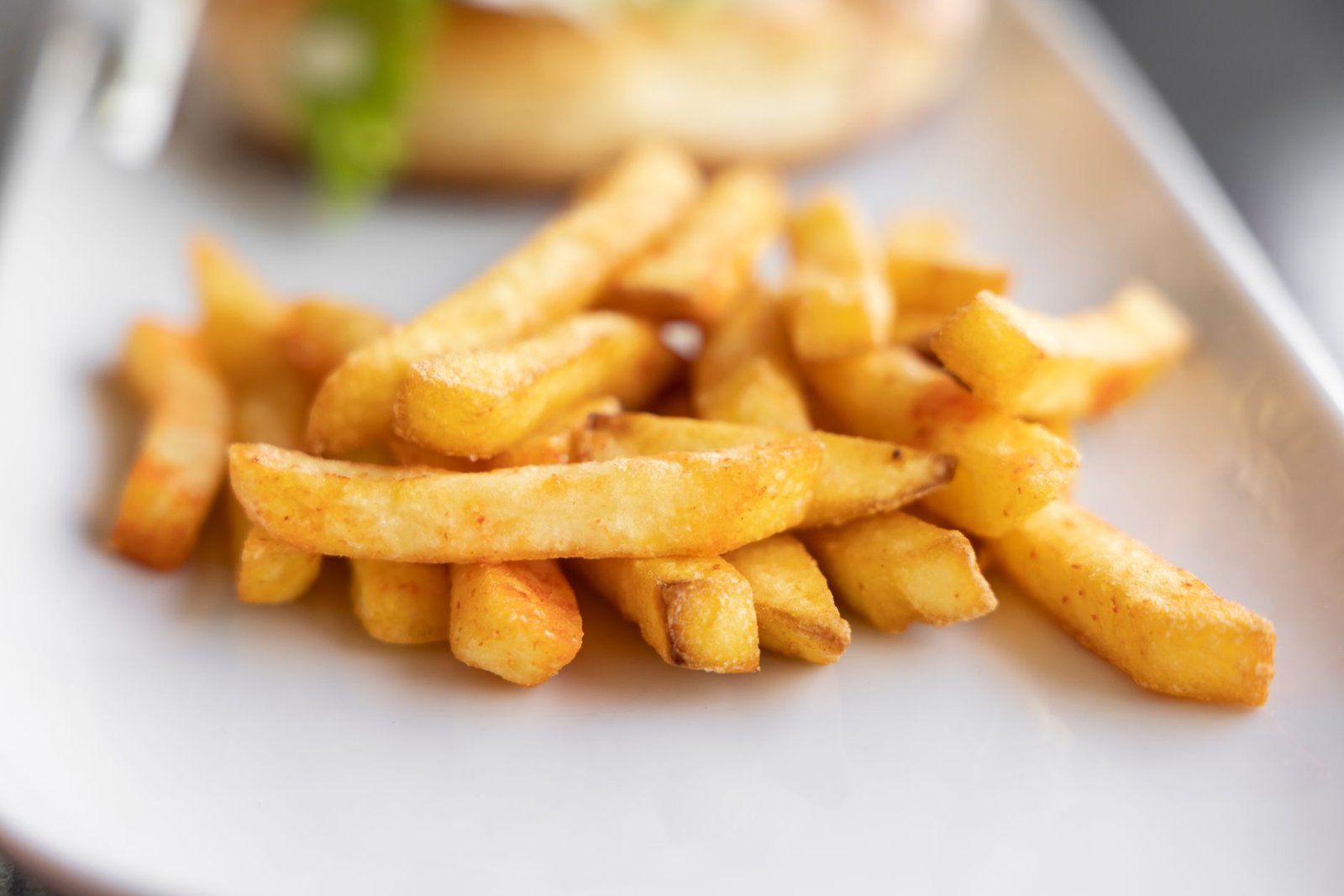
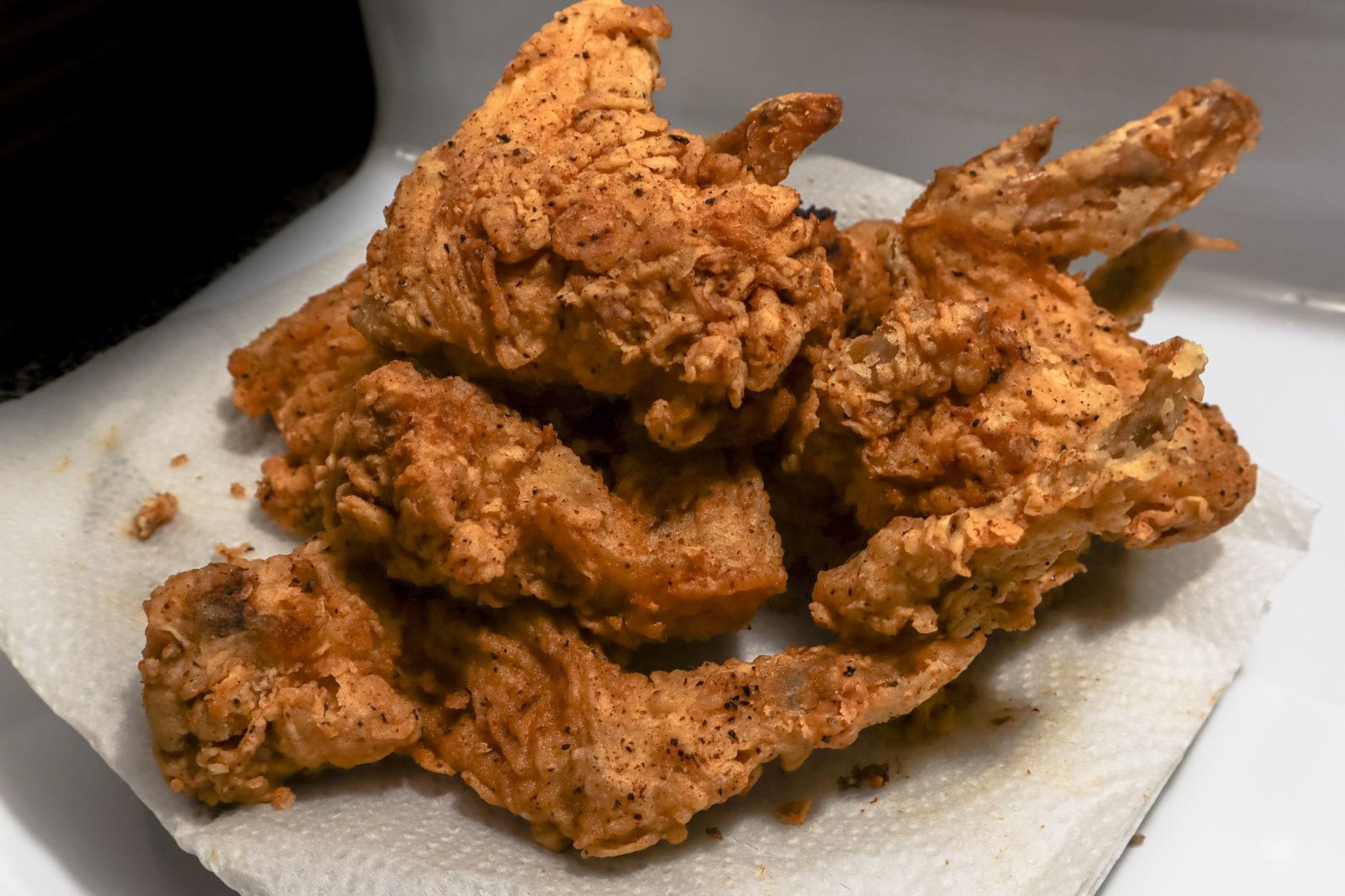
This is where the TurboBlaze earns its keep. TechGearLab scored its cooking quality 8.5/10 and cooking speed 8.4/10, ranking it #2 out of ten fryers tested. Tom’s Guide ran potato wedges to perfect crispness, got “lightly charred” roasted vegetables, and pulled a 3.9-lb rotisserie-style chicken out moist inside with crackly skin after about 60 minutes. Frozen chicken nuggets finished in 6 minutes against a 7–9 minute package estimate. The high 450°F ceiling and the moving-air advantage of the DC fan are doing real work here.
Verdict: Best-in-class crisping for the money. This is the reason to buy it.
[ADD YOUR EXPERIENCE: report your own fries and wings results — batch size, temp, time, and whether the edges crisped evenly front-to-back.]
Presets and controls
The touchscreen sits at an angle so you can read it from above without bending down, which is a small thing that matters more than you’d think on a low counter. The nine presets cover the common cases and the manual mode gives you full control of temp, time, and fan speed. TechGearLab rated ease of use 8.2/10. The gap versus a Ninja is that there’s no app and no voice control — everything happens on the unit.
Verdict: Clear and quick to learn. Not “smart,” and honestly it doesn’t need to be.
Noise
Air fryers are loud because they’re basically a hair dryer pointed at your food. The TurboBlaze measured around 68 dB at its absolute max — full fan, 446°F — which testers compared to being roughly 6 dB above a running electric range. Drop the fan speed for gentler cooking and it gets noticeably quieter. For a 1,725-watt machine, that’s a good result.
Verdict: Quieter than most rivals at the same power. A genuine advantage in an open kitchen.
Basket size and shape
Six quarts sounds huge, but the usable cooking area is 85.6 square inches — fine for a family of four, tight if you’re feeding five or trying to do a full tray of wings in one go. The basket footprint is more square than some, which helps you lay food in a single layer. If you routinely batch-cook, size up or go dual-basket.
Verdict: Right-sized for 2–4 people. Don’t expect miracles for a crowd.
Cleaning
Both testers I trust called cleanup easy. Tom’s Guide got the basket and crisper plate clean with just hot water, no soaking, even after chicken. Both parts are dishwasher-safe, and the PFAS-free ceramic releases food well. TechGearLab docked ease-of-cleaning to 7/10 — not because it’s hard, but because of that center-hole issue below. For a full routine, see our guide on cleaning an air fryer the right way.
Verdict: Easy in normal use. Ceramic coating is the reason.
App and smart features
There aren’t any, and that’s a deliberate choice. No Wi-Fi, no app, no voice assistant. If you want your fryer to talk to your phone, this isn’t the one. Everything is done on the angled screen.
Verdict: A non-issue for most, a dealbreaker for smart-home devotees.
What no one else tells you about the TurboBlaze
Every other review will tell you it’s fast, quiet, and crisps well. All true. Here’s the part the glowing roundups skip: the crisper tray has a large hole in the center, and small food falls through it. Cut fries, tater tots, chopped vegetables, small nuggets — they can slip down onto the heating area below, where they scorch and turn into the thing you’re scraping off at cleanup. TechGearLab flagged “food falls thru tray” as its single biggest complaint, and it’s the reason cleaning dropped to a 7 despite the easy coating.
There’s a second quiet issue: the unit runs about 4°F cooler than the number you set, per lab measurement, and temperature accuracy scored only 7/10. In practice you compensate by nudging the dial up or adding a minute, and most people never notice. But if you bake to a recipe that assumes a precise temperature, know that the display is optimistic.
And the thing nobody frames honestly: COSORI had a large air-fryer recall in 2023 on older, different models over a fire risk. The TurboBlaze is not one of the recalled units, and it’s a newer design — but if you’re the kind of buyer who registers products and watches for recall notices, this is a brand where doing that is worth the two minutes. That’s not a knock on the TurboBlaze specifically; it’s context an honest reviewer should hand you.
None of this sinks the machine. The falling-food problem is solved by a $6 pack of perforated liners or a rack, the temperature offset is a one-time mental adjustment, and the recall doesn’t touch this model. But you deserve to know before you buy, not after.
COSORI TurboBlaze vs Ninja AF141 vs Instant Vortex Plus
Here’s how the TurboBlaze stacks up against the two machines most people cross-shop it with: the perennially popular Ninja AF141 Pro and the budget-favorite Instant Vortex Plus.
| Feature | COSORI TurboBlaze | Ninja AF141 Pro | Instant Vortex Plus |
|---|---|---|---|
| Capacity | 6 qt | 5 qt | 6 qt |
| Wattage | 1,725 W | 1,750 W | 1,700 W |
| Max temp | 450°F | 400°F | 400°F |
| Functions | 9-in-1 | 4-in-1 | 6-in-1 |
| Fan | DC, 5 speeds + turbo | Single-speed | Single-speed |
| Coating | PFAS-free ceramic | PTFE nonstick | PTFE nonstick |
| Street price (Sept 2026) | ~$89.99–$119.99 | ~$89.99 (MSRP $129.99) | ~$70–$99.95 |
| Best for | Most people who want speed + coating | Simplicity and a proven track record | Tightest budget |
The short version: the TurboBlaze wins on temperature ceiling, fan control, coating, and function count. The Ninja wins on being the dead-simple, everyone-owns-one default with a long reliability history. The Instant Vortex wins if you just want a competent 6-quart fryer for the least money. If you’re weighing Ninja against another brand more broadly, we did a full head-to-head with the Ninja that’s worth a read.
Who should buy the COSORI TurboBlaze — and who should skip it
Buy it if you’re:
- A family of two to four who wants the best crisping and speed near $100.
- PFAS-conscious and want a ceramic coating without paying a premium.
- Sensitive to noise in an open-plan kitchen.
- Someone who likes to tinker — the fan speeds and dehydrate/proof modes give you room to experiment.
Skip it if you’re:
- Feeding five or more regularly — go bigger or dual-basket.
- Set on app or voice control — the TurboBlaze has neither.
- Buying strictly on lowest price — the Instant Vortex Plus does the basics for less.
- Allergic to preheating — you’ll do it manually every time here.
If none of those personas fit you cleanly, our broader roundup of the best air fryers under $150 lays out more options by use case.
The honest limits
Let me not oversell this. The TurboBlaze is an excellent value air fryer, not a perfect appliance. The crisper tray’s center hole is a real annoyance you’ll want to work around from day one. It makes you preheat manually, and there’s no shake reminder to nudge you halfway through — you’re on your own to remember. The display reads about 4°F warm. And six quarts, while roomy on paper, is single-layer territory for one household, not a party. None of these are dealbreakers at this price, but if any one of them lands on a specific dealbreaker for you, the comparison table above points to a better match.
The one-line verdict
The COSORI TurboBlaze crisps like a machine twice its price, runs quieter than its rivals, and skips the PFAS coating — for around $100, it’s the air fryer I’d tell most people to buy in 2026.
Frequently asked questions
Is the COSORI TurboBlaze worth it in 2026?
Yes, for most households. At an MSRP of $119.99 and a frequent street price near $89.99–$99.99, you get best-in-class crisping, a quiet DC motor with five fan speeds, a 450°F ceiling, and a PFAS-free ceramic coating. The main compromises — a fiddly center tray hole and manual preheating — are minor next to what you’re paying.
How many watts is the COSORI TurboBlaze?
It’s rated at 1,725 watts, right in line with the Ninja AF141 (1,750 W) and Instant Vortex Plus (1,700 W). The difference is the DC motor and variable fan, which use that power more efficiently for faster, more even cooking.
What is the temperature range on the TurboBlaze?
90°F to 450°F. The 450°F top end is higher than the Ninja AF141 and Instant Vortex Plus, which both cap at 400°F — useful for getting a hard sear or extra crispy skin. Note that lab testing found the unit runs about 4°F cooler than the set temperature.
Does the COSORI TurboBlaze have a PFAS-free coating?
Yes. The basket and crisper plate use a PFAS-free ceramic nonstick, which is one of the model’s biggest selling points in 2026 for buyers avoiding traditional PTFE coatings.
How loud is the COSORI TurboBlaze?
About 68 dB at its loudest — full fan speed and 446°F — which testers put at roughly 6 dB above a running electric range. Lower the fan speed and it gets quieter. It’s one of the quieter fryers in its power class.
Is the TurboBlaze dishwasher safe?
Yes. Both the basket and the crisper plate are dishwasher-safe, and the ceramic coating releases food well enough that hot water alone often does the job.
Why does food fall through the crisper tray?
The tray has a large hole in the center for airflow, and small items — cut fries, tots, small nuggets — can slip through onto the heating area and scorch. It’s the model’s most common complaint. A pack of perforated air-fryer liners or a small rack solves it for a few dollars.
COSORI TurboBlaze vs Ninja AF141 — which should I buy?
Buy the TurboBlaze for more functions, a higher temperature ceiling, variable fan speeds, and the PFAS-free coating. Buy the Ninja AF141 if you want the simplest possible controls and a long, proven reliability record. They’re priced similarly around $89.99–$119.99, so it comes down to whether you value capability or simplicity.
Is there a good budget alternative under $100?
Yes — the Instant Vortex Plus 6-quart. It’s a competent 6-in-1 fryer that regularly sells between $70 and $99.95. You give up the DC motor, the extra functions, and the ceramic coating, but for the tightest budget it covers the basics well.
Does the COSORI TurboBlaze have an app?
No. There’s no Wi-Fi, app, or voice control — everything is controlled on the angled touchscreen. If smart-home integration matters to you, this isn’t the right pick.
How big is the TurboBlaze and how many people does it feed?
It measures 11.7″ × 11.5″ × 14.2″ with 85.6 square inches of cooking area. That comfortably feeds two to four people. For five or more, size up or consider a dual-basket model.
What’s the best price to pay for the COSORI TurboBlaze?
Aim for under about $100. The MSRP is $119.99, but it regularly drops to $89.99–$99.99 on sale as of September 2026. Much above $120 and the comparison table above gives you stronger options. If you want to time cooking too, bookmark our air fryer cooking times chart.
Naveen researches and reviews home & kitchen gadgets for TrendifyReview. See how we review.

