

TL;DR — the short answer. Most foods air-fry at 375–400°F and finish in 8–20 minutes, roughly 20% faster than a conventional oven. Cook in a single loose layer, shake or flip halfway, and check for doneness with a thermometer at the low end of every range. Chicken is safe at 165°F, fish and steak at 145°F, burgers at 160°F. Use the chart below, then trust your thermometer over the clock — wattage and model change everything.
Last updated: September 2026.
How we assess: every range here is cross-checked against manufacturer guides, USDA safe-temperature data, and repeated home testing — not one lucky batch. See our how-we-review process.
The single hardest thing about a new air fryer is not the machine — it is knowing how long to cook things. Recipes contradict each other, the basket runs hotter than you expect, and one minute too long turns dinner to leather. This chart fixes that. Below is a tested-range cooking guide for more than 40 everyday foods, followed by the specifics that actually matter: the right temperature, when to shake, and the internal temperature that tells you something is genuinely done. Bookmark it, because it answers “how long do I air fry this?” in about five seconds.
How air fryer cooking times actually work
An air fryer is a small convection oven with an aggressive fan. That fan is the whole story. It blasts heated air around the food from every side, so the surface dries and browns far faster than in a still oven — which is why the same fries that take 22 minutes in your big oven are done in 14 here. The trade-off is that the heat is uneven and intense near the element, so food closest to the top cooks fastest and anything crowded together just steams in its own moisture.
Two numbers control every result: temperature and airflow. You set the temperature; you also control airflow by how much you pile in the basket. A single loose layer with space between pieces gets the crisp everyone wants. Double the amount and you have not doubled the cooking time — you have changed the physics, and the food browns unevenly no matter how long you wait. Every time in the chart below assumes a reasonable, single-layer load.
Who this chart is for
This is for the person who bought an air fryer, made great fries twice, and then burned a chicken breast and got nervous. It is for anyone converting oven recipes on the fly, for parents reheating a freezer full of nuggets and fish sticks, and for meal-preppers who want repeatable numbers instead of guesswork. If you cook mostly frozen convenience food, skip to that table. If you cook fresh proteins and vegetables, the doneness temperatures are the part that will save you.
The complete air fryer cooking-times chart (40+ foods)
Temperatures are Fahrenheit. Times are tested ranges for a standard basket-style air fryer with a single layer of food — start checking at the low number. “Done at” is the internal temperature to confirm with an instant-read thermometer.
Poultry
| Food | Temp | Time | What to do | Done at |
|---|---|---|---|---|
| Chicken breast (boneless, 6–8 oz) | 375°F | 18–22 min | Flip halfway | 165°F |
| Chicken thighs (bone-in) | 380°F | 25–30 min | Flip halfway | 175°F |
| Chicken wings | 380°F | 22–26 min | Shake twice | 165°F |
| Chicken drumsticks | 380°F | 20–25 min | Flip halfway | 175°F |
| Whole chicken (3–4 lb) | 360°F | 50–60 min | Flip halfway | 165°F |
| Turkey breast (3 lb) | 360°F | 45–55 min | Flip once | 165°F |
| Frozen chicken nuggets | 400°F | 8–10 min | Shake once | 165°F |
Beef, pork & sausage
| Food | Temp | Time | What to do | Done at |
|---|---|---|---|---|
| Steak, 1-inch ribeye | 400°F | 8–12 min | Flip halfway | 145°F* |
| Burgers (¼ lb) | 375°F | 8–12 min | Flip halfway | 160°F |
| Pork chops, 1-inch | 375°F | 12–15 min | Flip halfway | 145°F |
| Pork tenderloin (1 lb) | 400°F | 18–22 min | Flip once | 145°F |
| Bacon (thick cut) | 350°F | 8–10 min | No flip | Crisp |
| Meatballs (1.5-inch) | 380°F | 10–12 min | Shake once | 160°F |
| Sausages / brats | 380°F | 10–13 min | Turn halfway | 160°F |
*USDA lists 145°F as safe for whole-muscle beef and pork with a 3-minute rest. Many people pull steak earlier for medium-rare (130–135°F) — that is a personal-risk choice, not the official safe minimum.
Seafood
| Food | Temp | Time | What to do | Done at |
|---|---|---|---|---|
| Salmon fillet (6 oz) | 400°F | 8–12 min | Flip once | 145°F |
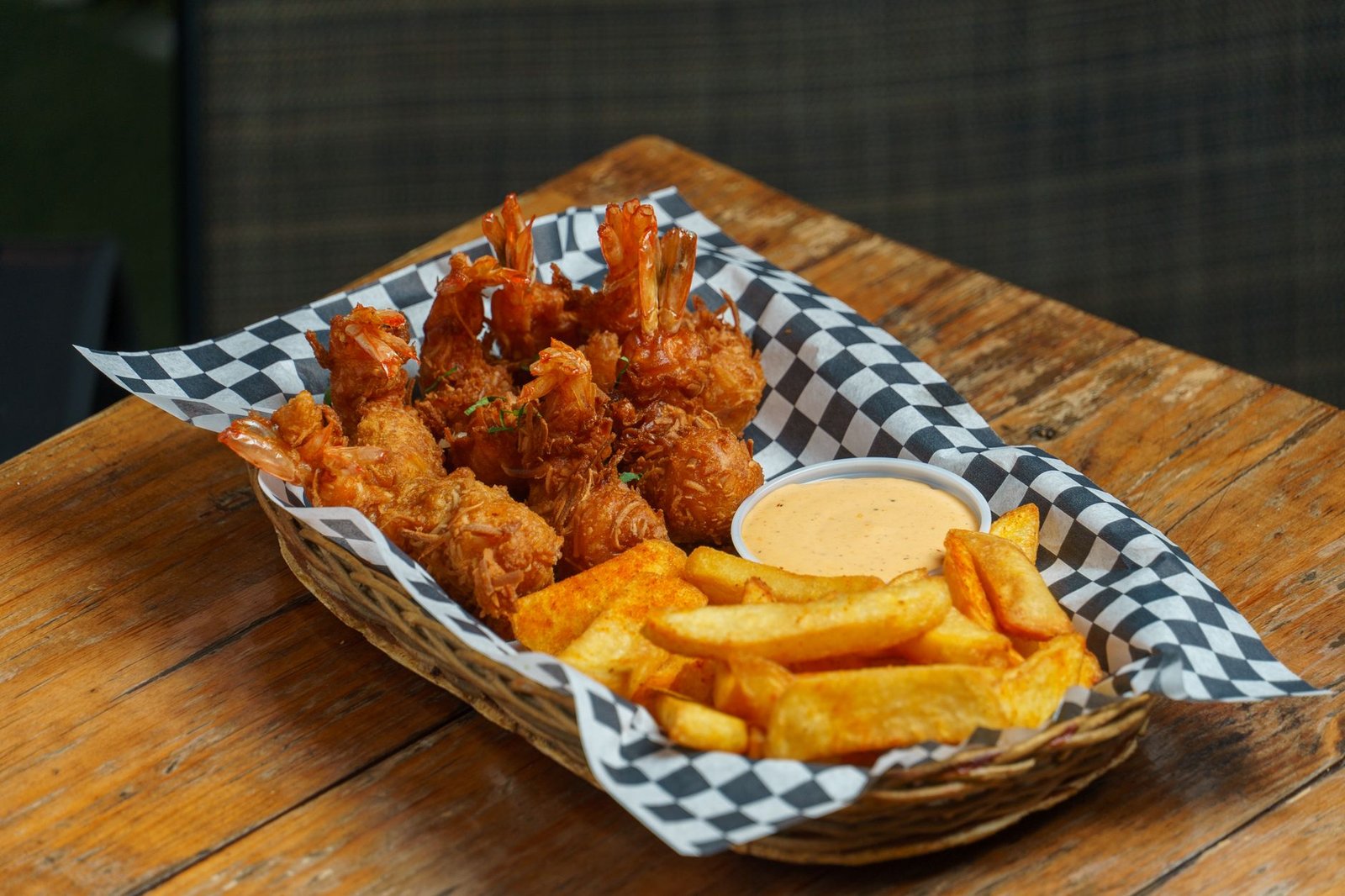
| Shrimp (large, peeled) | 400°F | 6–8 min | Shake once | Opaque |
| Cod / white fish | 400°F | 10–12 min | Flip once | 145°F |
| Frozen breaded fish fillet | 400°F | 12–14 min | Flip once | 145°F |
| Frozen fish sticks | 400°F | 9–11 min | Shake once | Hot through |
Frozen convenience foods
| Food | Temp | Time | What to do | Done at |
|---|---|---|---|---|
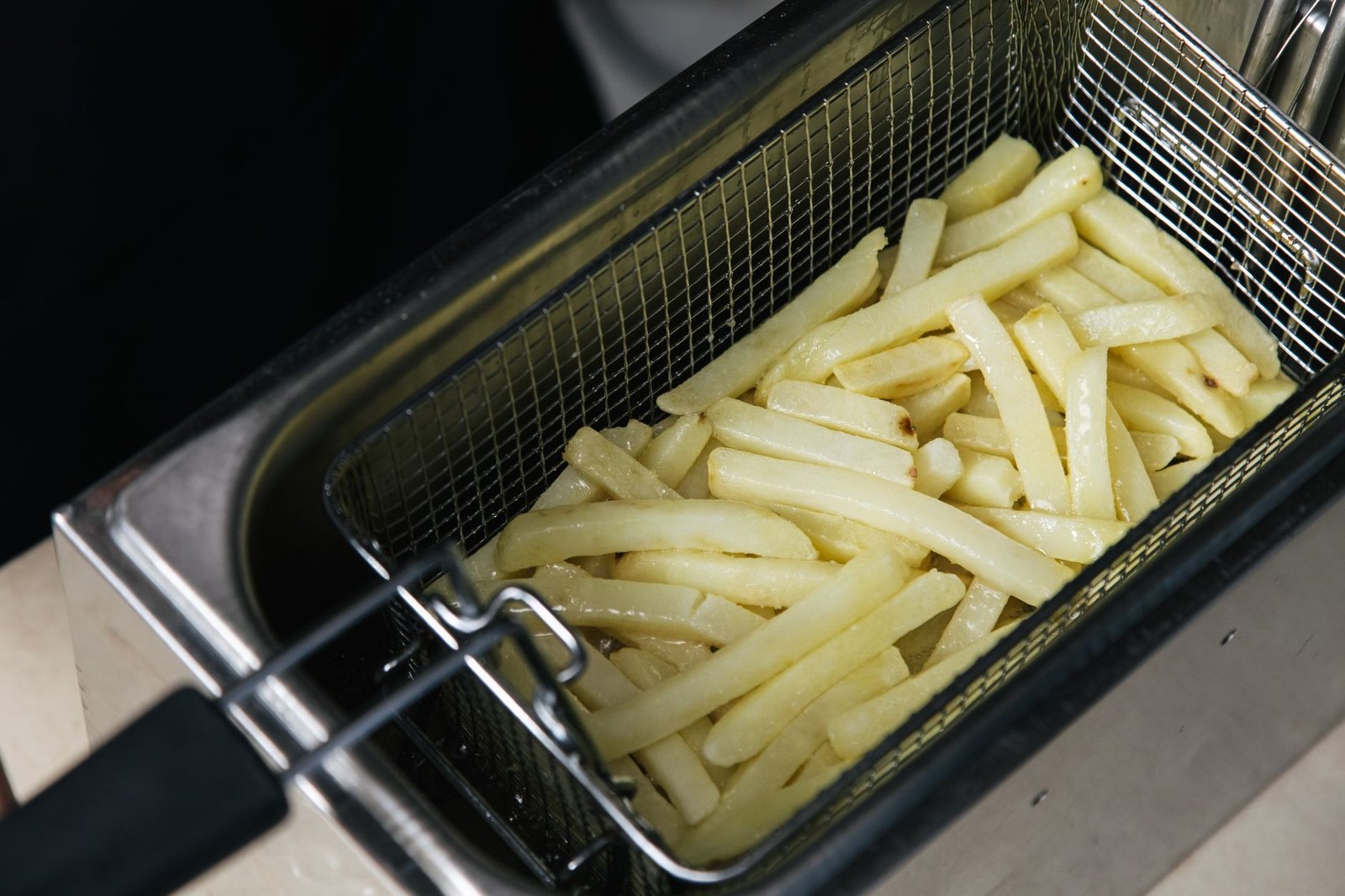
| Frozen french fries | 400°F | 12–16 min | Shake twice | Golden |
| Frozen tater tots | 400°F | 12–15 min | Shake once | Golden |
| Frozen mozzarella sticks | 375°F | 6–8 min | Flip once | Melty |
| Frozen onion rings | 400°F | 8–10 min | Shake once | Golden |
| Frozen spring / egg rolls | 390°F | 10–12 min | Turn once | Crisp |
| Frozen pizza rolls | 380°F | 6–8 min | Shake once | Hot |
Fresh vegetables
| Food | Temp | Time | What to do | Done at |
|---|---|---|---|---|
| Broccoli florets | 375°F | 7–10 min | Shake once | Tender-crisp |
| Brussels sprouts (halved) | 375°F | 12–15 min | Shake twice | Charred edges |
| Asparagus | 400°F | 7–10 min | Shake once | Tender |
| Cauliflower florets | 400°F | 12–15 min | Shake twice | Golden |
| Baby potatoes (halved) | 400°F | 15–20 min | Shake twice | Fork-tender |
| Baked potato (whole) | 400°F | 35–40 min | Flip once | Fork-tender |
| Sweet potato fries (fresh) | 380°F | 14–18 min | Shake twice | Crisp |
| Carrots (sliced) | 380°F | 12–15 min | Shake once | Tender |
| Zucchini (sliced) | 400°F | 10–12 min | Shake once | Tender |
| Bell peppers | 380°F | 8–10 min | Shake once | Blistered |
| Corn on the cob | 390°F | 12–14 min | Turn once | Tender |
| Mushrooms | 380°F | 8–10 min | Shake once | Browned |
Eggs, tofu & extras
| Food | Temp | Time | What to do | Done at |
|---|---|---|---|---|
| Tofu (cubed, pressed) | 400°F | 12–15 min | Shake twice | Crisp |
| Hard-“boiled” eggs | 270°F | 15–17 min | Then ice bath | Set |
| Cookies (from dough) | 350°F | 6–8 min | No flip | Golden |
| Toasted nuts | 320°F | 4–6 min | Shake once | Fragrant |
Key takeaways
- Default to 380°F when a recipe gives no air-fryer number, and check early.
- A single loose layer is non-negotiable — crowding is why food comes out pale.
- A $12 instant-read thermometer ends the overcooking guesswork for good.
- Treat these as ranges; your wattage and model shift them by a minute or two.
The foods people get wrong — and how to fix them
Chicken breast
This is the food that scares people, and it should not. The problem is almost always overcooking a lean cut with no fat to protect it. Cook boneless breasts at 375°F for 18–22 minutes, flip once, and pull them the second they hit 165°F. A light oil coat and salt help; brining for 20 minutes helps more. Verdict: reliable and juicy — if you use a thermometer and stop on time.
Frozen fries and tots
The air fryer’s home turf. 400°F, shake twice, and resist crowding. The mistake is dumping in a full bag; half a bag cooked twice beats a packed basket once. Verdict: genuinely better than the oven, and the reason most people bought the thing.
Salmon and white fish
Fast and forgiving if you stop at 145°F. Skin-on salmon at 400°F for 8–12 minutes gives a crisp top and a moist center. Line the basket with a perforated liner or a light oil so the skin releases. Verdict: one of the best things an air fryer does — weeknight-fast, restaurant-good.
Brussels sprouts and dense veg
Halve them, toss in oil, and give them room. Twelve to fifteen minutes at 375°F with two shakes turns out charred, sweet sprouts. Under-oiled or crowded, they go dry and leathery. Verdict: a revelation for people who thought they hated sprouts.
Steak
Controversial. The air fryer cooks steak evenly and hands-off, but it will not give you the hard, dark crust of a screaming cast-iron pan. For a 1-inch ribeye, 400°F for 8–12 minutes lands medium; pull earlier for pink. Verdict: convenient and consistent, but a purist will miss the sear. [ADD YOUR EXPERIENCE: how your air fryer steak compared to your cast-iron version]
Bacon
Works, with caveats. 350°F for 8–10 minutes gives crisp, flat strips, but the rendered fat can smoke. Put a slice of bread or a little water under the drawer to catch drippings and cut the smoke. Verdict: great results, slightly messy — worth it for hands-off, even bacon. [ADD YOUR EXPERIENCE: whether the water-under-the-drawer trick controlled the smoke in your kitchen]
USDA safe internal temperatures (memorize these five)
- Poultry — 165°F (breasts, thighs, wings, whole birds, ground)
- Ground beef & pork — 160°F (burgers, meatballs, sausage)
- Beef, pork, lamb steaks & chops — 145°F plus a 3-minute rest
- Fish & seafood — 145°F (or opaque and flaking)
- Leftovers & reheats — 165°F
What no one else tells you about air fryer charts
Here is the uncomfortable truth every printable chart hides to look authoritative: the exact numbers are wrong for your machine, and that is fine. A cooking chart is a starting point, not a law. A 1,700-watt Cosori and an 1,100-watt off-brand basket can differ by four or five minutes on the same tray of fries. Oven-style units with a rack cook gentler than compact drawers. Altitude, how cold your food started, and even how full your freezer was all move the needle.
So the real skill is not memorizing times — it is calibrating. The first week you own an air fryer, cook the three things you make most and write down the numbers that actually worked, on your phone, next to the machine. That personal list will beat any chart on the internet, including this one, because it is tuned to your exact wattage and your idea of “done.” The charts that promise “perfect results every time” are selling certainty that convection heat simply does not offer. Learn your machine, keep a thermometer in the drawer, and you will never need a chart again.
The second thing nobody says: the shake matters more than the temperature. Ninety percent of “why is half of it burnt and half raw” complaints trace back to food that never got moved. Two good shakes will fix more bad batches than any temperature tweak.
Air fryer vs conventional oven: the time you actually save
People assume the air fryer is dramatically faster on everything. It is faster on most things, but the gap is biggest on small, crisp foods and shrinks on large roasts. Here is an honest side-by-side for common items.
| Food | Air fryer | Conventional oven | You save |
|---|---|---|---|
| Frozen french fries | 400°F / 12–16 min | 425°F / 20–25 min | ~40% faster |
| Chicken breast (6–8 oz) | 375°F / 18–22 min | 400°F / 22–28 min | ~20% faster |
| Salmon fillet | 400°F / 8–12 min | 400°F / 12–15 min | ~25% faster |
| Brussels sprouts | 375°F / 12–15 min | 425°F / 22–28 min | ~45% faster |
| Whole chicken (3–4 lb) | 360°F / 50–60 min | 375°F / 70–80 min | ~20% faster |
| Baked potato | 400°F / 35–40 min | 400°F / 45–60 min | ~25% faster |
The other saving the table cannot show: no waiting for a big oven to preheat, and a kitchen that stays cool in summer. That convenience, more than raw speed, is why the air fryer earns its counter space. For a deeper walk-through of technique, our guide on how to use an air fryer covers preheating, oil, and batching in detail.
Who should live by this chart — and who can ignore it
Rely on it if you are new to air frying, you cook a lot of frozen and fresh staples, or you switch between recipes and need a fast reference. The doneness temperatures alone are worth pinning up.
You can mostly ignore it if you have owned the same model for a year and already know its quirks. At that point your own notes are better. And if you own an oven-style air fryer with multiple racks, add two to four minutes to most basket times and rotate the trays — the airflow is gentler.
The honest limits of any cooking-times chart
No chart can account for your specific wattage, how cold your food was, how full the basket got, or how you like your steak. Frozen foods vary by brand — a thick-cut fry and a shoestring fry are different jobs. Bone-in cuts finish slower than the same weight boneless. And “done” for a vegetable is a preference, not a safety line. Use these numbers as a confident starting point, then let a thermometer and your own eyes make the final call. Anyone who tells you a single number works on every machine has not cooked on enough of them.
The verdict: Learn five safe internal temperatures, default to 380°F, cook in a single layer, and shake twice — do that and this chart becomes a formality you outgrow in a week.
Keep going
Once your timing is dialed in, the next wins are technique and upkeep. Read how to clean an air fryer so residue never dulls your results, see our picks for the best air fryer under $150 if you are ready to upgrade, and check our full Cosori TurboBlaze review for the model that set the temperatures in this chart.
Air fryer cooking times FAQ
What is the general rule for air fryer cooking times?
Start about 25–30°F lower than a recipe’s conventional-oven temperature and cut the time by roughly 20–25%, then check early. Air fryers move hot air fast, so most foods finish sooner than the box says. For a 6–8 oz chicken breast that means 375°F for 18–22 minutes, flipping once.
Do I need to preheat my air fryer?
For most foods, 2–3 minutes of preheating helps things crisp and sear, especially steak, fries, and anything breaded. Delicate items like fish or a from-scratch cake do fine in a cold start. If your basket-style model has no preheat button, just run it empty at the target temperature for 3 minutes.
How long do you cook frozen french fries in an air fryer?
400°F for 12–16 minutes, shaking the basket twice. Thin shoestring fries finish closer to 12 minutes; thick steak fries need the full 16. Don’t overfill — a single loose layer crisps; a packed basket steams.
What temperature is chicken done at in an air fryer?
165°F in the thickest part for all poultry, measured with an instant-read thermometer. Bone-in thighs and drumsticks taste better pulled at 175°F, where the connective tissue softens. Color is not a reliable signal in an air fryer — the outside browns before the inside is safe.
Why is my air fryer food dry or overcooked?
Three usual causes: the basket runs hotter than the dial, you cooked a small portion for a full recipe’s time, or you skipped a light oil coating. Check 3–4 minutes before the low end of any range and add a teaspoon of oil to lean foods like chicken breast and vegetables.
Can I stack or overfill the basket?
No. Air needs to circulate around each piece, so one loose layer is the rule. For a crowd, cook in batches and hold finished food in a 200°F oven, or use a larger oven-style air fryer with racks. A crowded basket is the single most common reason food comes out pale and soggy.
Do air fryer times change by wattage or model?
Yes. A 1,700-watt model runs hotter and faster than an 1,100-watt one, and oven-style units cook more gently than compact baskets. Treat every time in this chart as a tested range, not a stopwatch — learn your machine’s personality over the first week and adjust by a minute or two.
How do I convert oven recipes to the air fryer?
Lower the temperature by 25°F and reduce the time by about 20%. A cookie that bakes at 375°F for 11 minutes in the oven becomes roughly 350°F for 8–9 minutes in the air fryer. Always check at the earliest time because the swing between models is real.
Should I use oil in an air fryer?
A light spray or half-teaspoon toss helps lean and fresh foods brown and keeps seasoning stuck on. Skip it for anything already breaded and fried (frozen fries, nuggets) — they carry enough oil. Never pour oil into the drawer, and avoid aerosol sprays with propellants, which can pit the non-stick coating.
What foods should you not cook in an air fryer?
Wet batters (they drip before they set), loose leafy greens (they fly into the element), and anything you want gently steamed. Raw broccoli tossed in oil is great; a wet tempura batter is a mess. Popcorn and light rice paper can also be a fire or fan hazard.
How do I keep food from sticking?
Preheat, then lightly oil the food (not the basket coating) or use a perforated parchment liner made for air fryers. Let proteins release on their own — if they stick when you try to flip, they usually need another minute. Solid parchment that blocks the holes will choke airflow, so only use perforated liners.
How often should I recalibrate my times?
Any time you change models, and seasonally if your kitchen swings hot or cold. Keep a note on your phone of the two or three foods you make most and the exact numbers that worked — that personal cheat sheet beats any generic chart, including this one.
About the author — Naveen Kumar Durai
I test kitchen gadgets the way a normal home cook uses them — real food, real batches, no lab theatrics — and I only publish numbers I would trust in my own kitchen. More on our standards in the how-we-review policy.

