

Short answer: to clean an air fryer the right way, wash the basket and crisper plate in warm soapy water after every use, wipe the heating element and inside walls with a damp cloth every week or two, and never touch it with steel wool, oven cleaner, or the dishwasher if you can help it. For baked-on grease, a baking soda paste left to sit for 10 minutes does more than any amount of hard scrubbing. That’s the whole game. The rest of this guide is the detail that keeps your basket non-stick for years instead of months.
How we assess: this guide draws on manufacturer cleaning instructions, a hands-on method test by The Kitchn, and appliance-care advice, cross-checked against how these machines actually fail. See our How We Review page for how we put guides together. Last updated: September 2026.
- Wash the basket and plate after every use — 90% of air fryer problems start with skipped cleanings.
- Baking soda paste beats elbow grease for baked-on gunk. Let chemistry do the work.
- Steel wool, abrasive pads, and oven cleaner permanently ruin the non-stick coating.
- Deep clean the heating element every 1–2 weeks if you cook fatty foods; monthly otherwise.
- Smoke almost always means old grease, not a broken machine.
What cleaning an air fryer actually involves
People overthink this. An air fryer is a small convection oven with a fan, a heating coil up top, and a perforated basket that lets hot air hit food from all sides. Cleaning it means three separate jobs, not one: the removable parts (basket, crisper plate, tray), the interior chamber and walls, and the heating element itself. Most people do the first, ignore the second, and never think about the third until the kitchen fills with smoke.
The reason cleaning matters more here than with a regular oven is the non-stick coating. That coating is what makes an air fryer worth owning, and it’s also the most fragile part. Every time you drag a metal fork across it or scrub with something rough, you take a little off. Once it’s gone, food welds itself to the bare metal and no amount of oil spray brings it back. Good cleaning is really coating protection wearing a disguise.
Who this guide is for
If you use your air fryer more than twice a week, cook anything with fat in it, or have noticed food starting to stick where it didn’t used to, this is for you. It’s also for anyone who inherited a grimy secondhand unit and wants to bring it back without wrecking it. If you’ve only ever made frozen fries in a brand-new machine and it still looks factory-fresh, skim the after-every-use routine and bookmark the rest for when reality sets in. New to the appliance entirely? Start with the basics of using one first, then come back.
Your at-a-glance cleaning schedule
| Part | How often | Method | Time |
|---|---|---|---|
| Basket & crisper plate | After every use | Warm soapy water, soft sponge | 3–5 min |
| Interior walls & floor | Every 2–3 uses | Damp cloth, mild soap | 2 min |
| Heating element (coil) | Every 1–2 weeks | Damp microfiber, soft toothbrush | 3 min |
| Baked-on grease | As needed | Baking soda paste, 10–15 min soak | 15–20 min |
| Exterior | Weekly | Damp cloth, dry buff | 1 min |
The after-every-use routine (do this and you’ll rarely need the rest)
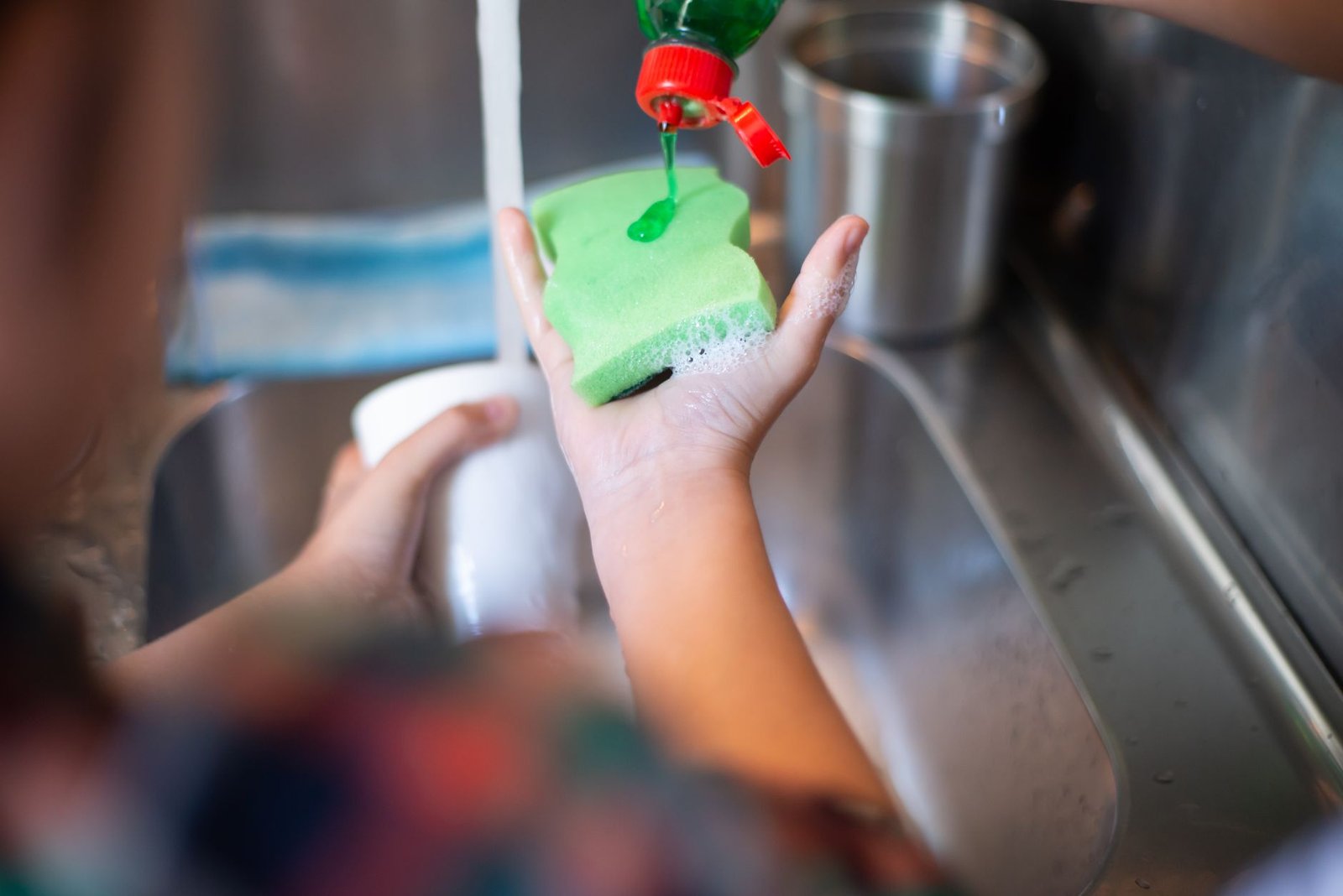
Here’s the honest truth: if you nail this one habit, you’ll almost never face baked-on grease at all. Wait about 10 minutes after cooking so the parts are warm but not hot. Pull out the basket and crisper plate, and wash them in warm water with a couple of drops of dish soap and a soft sponge or cloth. Get into the seams and around the rubber bumpers with an old toothbrush. Rinse, then dry with a towel or leave to air dry fully before sliding them back in.
My verdict: This is the single highest-leverage thing in the whole guide. Two minutes now saves you a 20-minute grease battle later. Warm-but-cooled is the sweet spot — hot parts can warp under cold water, and fully cold grease sets like glue. [ADD YOUR EXPERIENCE: mention how long you personally wait before washing, and whether you towel-dry or air-dry.]
How to remove baked-on grease without wrecking the coating
So you skipped a few cleanings. It happens. Baked-on grease looks intimidating but it surrenders to chemistry, not force. Make a paste with about two tablespoons of baking soda and just enough warm water to spread it. Coat the greasy areas, then walk away for 10 to 15 minutes. The baking soda breaks down the fat while you do something else.
Come back and scrub gently with a soft brush or that trusty old toothbrush. For the truly stubborn dark grime, upgrade the paste: add a squirt of dish soap and, after a minute, a splash of white vinegar. Let the fizz sit for 10 minutes, then wipe with the soft side of a sponge. In The Kitchn’s five-method test, the top result came from combining baking soda, a little hydrogen peroxide, and a dish-soap spray, then a gentle two-minute scrub — it cleared stuck food, grease, and odour in about three minutes.
My verdict: Baking soda paste is the workhorse and the one I’d reach for first. The peroxide combo is genuinely more powerful for old, dark grime, but for weekly maintenance it’s overkill. The thing that ruins baskets isn’t grease — it’s people attacking grease with the wrong tools.
Cleaning the heating element (the part everyone forgets)
The coil at the top is where smoke is born. Unplug the machine, let it cool completely, and turn it upside down so the element faces you. Wipe it with a damp microfiber cloth, or a sponge wrung out in warm soapy water so it’s barely damp. Work stuck-on splatter loose with a soft toothbrush. The rule that matters: no dripping water, ever, near the housing, and let everything dry fully before you plug it back in.
My verdict: This is a five-minute job people avoid for months, and it’s the fix for 90% of “why is my air fryer smoking” panic. If you cook bacon, wings, or anything oily, put it on a two-week repeat and you’ll forget smoke was ever a thing.
Five cleaning methods, ranked
Not every method is worth your time. Here’s how the common ones actually stack up, based on The Kitchn’s hands-on test plus what holds up in a normal kitchen.
| Method | Best for | Effort | Verdict |
|---|---|---|---|
| Warm soapy water + soft sponge | Everyday cleaning | Low | The default. All most people ever need. |
| Baking soda paste (10–15 min) | Baked-on grease | Low–medium | Best value. Chemistry over scrubbing. |
| Baking soda + dish soap + vinegar | Old, dark grime | Medium | Strong and cheap. My pick for rescue jobs. |
| Vinegar + lemon steam (400°F, 5 min) | Odour & light grease | Low | Great for smells; weak on stuck-on food. |
| Dishwasher | Convenience | Very low | Skip it. Kills coatings fastest. |
What no one else tells you about air fryer cleaning
Here’s the contrarian bit. Every cleaning guide online tells you to scrub harder, buy special sprays, or run some viral steam hack. The real secret is the opposite: the less aggressively you clean, the longer your air fryer lasts. The machines that die early almost never die from grease. They die from being scrubbed to death with abrasive pads and metal tools, or from being run through the dishwasher until the coating flakes into the food.
The second thing nobody mentions: drying is half the job. People wash beautifully and then slam a damp basket back into a warm unit, which traps moisture around the electronics and the coil. That’s how you get rust spots and, occasionally, a machine that trips out. Air dry or towel dry fully — every time.
And the third: dishwasher-safe on the label is a marketing convenience, not a recommendation. Manufacturers know hand washing lasts longer; they label parts dishwasher-safe because customers demand it. If a basket that survives the dishwasher matters to you, check that spec when you’re choosing an air fryer that’s easy to clean — models like the COSORI TurboBlaze make a point of it.
Who should deep clean weekly — and who can relax
Deep clean the element every 1–2 weeks if you cook fatty foods often (wings, bacon, sausages, anything you spray with oil), use your air fryer most days, or have already had a smoking episode. Grease compounds fast, and staying ahead of it is far easier than a rescue.
You can stretch to monthly if you mostly reheat, cook frozen or low-fat foods, or use the machine only a couple of times a week. Still wash the basket after every use — that part isn’t negotiable — but the coil can wait.
The honest limits
Cleaning fixes grease, smell, and stickiness. It does not fix a coating that’s already scratched down to bare metal — once food welds to that, no routine brings the non-stick back, and it’s basket-replacement time. It also won’t save an element that’s genuinely failing; if you get smoke from a spotlessly clean machine, that’s an electrical issue, not a cleaning one. And if your basket is warping or the seams are splitting, that’s wear, not dirt. Know when you’re cleaning versus when you’re delaying a replacement you already need.
The verdict: clean gently and often, let baking soda do the heavy lifting, and never let a dishwasher or a metal scrubber near the coating — that’s how an air fryer basket lasts years instead of months.
Want to get more out of the machine while you’re at it? Our cooking-time chart keeps food from over-crisping (and over-greasing) in the first place, and if you’re shopping, here are the best air fryers under $150 that are genuinely easy to keep clean.
Frequently asked questions
How do I clean my air fryer after every use?
Let it cool for 10 minutes, then wash the basket and crisper plate in warm, soapy water with a soft sponge. Wipe the inside walls and the heating coil with a damp cloth. The whole thing takes about three to five minutes and stops grease from baking on in the first place.
Can I put my air fryer basket in the dishwasher?
Sometimes, but I’d rather you didn’t. Many baskets are labelled dishwasher-safe, yet the high heat and harsh detergent strip non-stick coatings faster than hand washing. If your manual says dishwasher-safe and you insist, use the top rack and a gentle cycle. Hand washing wins for longevity every time.
How do I remove baked-on grease from an air fryer?
Make a paste of two tablespoons of baking soda with a little warm water, spread it over the greasy spots, and leave it 10 to 15 minutes. Then scrub gently with a soft brush or old toothbrush and rinse. For the worst cases, add a spray of dish soap and a splash of vinegar to the paste, wait 10 minutes, and the grime lifts without scrubbing hard.
What should I never use to clean an air fryer?
Steel wool, metal scouring pads, abrasive powders, oven cleaner, and any harsh chemical spray. All of them scratch or dissolve the non-stick coating, and once that’s damaged, food sticks and the basket is effectively done. Never submerge the main unit that holds the heating element in water either.
How often should I deep clean my air fryer?
If you cook fatty foods like wings or bacon, deep clean the heating element every one to two weeks. For lighter use, once a month is fine. The removable basket and plate should still get a proper wash after every single use.
Why does my air fryer smoke?
Nine times out of ten it’s grease. Old fat pooled under the basket or splattered on the heating coil burns off as smoke the next time you run the machine. A quick wipe of the element and the drawer usually fixes it. High-fat foods and oil sprays with additives make it worse.
Is the soapy-water-in-the-basket hack safe?
The version where you wash just the removable basket with soapy water is fine. The viral version where you fill the whole machine and run it is risky, because water can reach the electronics and the heating element. Clean removable parts in the sink, not inside the appliance.
How do I clean the air fryer heating element?
Unplug the unit, let it cool, and turn it upside down so you can see the coil. Wipe it with a damp microfiber cloth or a sponge wrung out in warm soapy water. For stuck-on bits, a soft toothbrush works. Never let water pool in the housing, and dry it before plugging back in.
Can I use parchment liners to keep it clean?
Yes, perforated parchment or silicone liners catch grease and crumbs and cut cleaning time. Only add them once the food is in and weighing them down, and never preheat with an empty liner, because it can lift into the heating coil and catch fire.
Will vinegar damage my air fryer?
Diluted white vinegar is safe on the basket and interior and helps cut grease and odour. Don’t use it on the heating element directly in large amounts, and always rinse afterwards. Skip undiluted vinegar soaks on any painted or aluminium surfaces.
I test and research home and kitchen gadgets for TrendifyReview, and I’ve cleaned enough air fryers to know exactly how they die. I write the guide I wish I’d had before I ruined my first basket. See how we review.

