

A dehumidifier is one of those appliances you never think about until a room turns clammy, a window fogs over every morning, or a musty smell starts drifting up from the basement. Get the right one and the problem quietly disappears. Get the wrong size or the wrong type and you either burn money running an oversized unit or watch a too-small one run all day and never catch up.
This guide covers what actually matters before you buy: how to size a unit correctly under the current federal test standard, when a desiccant model beats a compressor one, which features earn their price, and roughly what one costs to run each month. The figures here come from manufacturer specifications, ENERGY STAR guidance, and U.S. Department of Energy testing rules.
How we assess: our research-first method pulls specifications from manufacturer manuals, ENERGY STAR listings, and federal test standards, then cross-checks them against verified owner reports before we recommend anything.
Last updated: August 2026.
How do I choose the right dehumidifier? Match the unit’s pint capacity to your room’s square footage and how damp it feels: a 20-pint model suits a small, slightly damp bedroom, while a wet 1,500-square-foot basement needs 45 to 50 pints. Then prioritize a built-in humidistat, auto-defrost, and a continuous-drain option.
What this guide covers
- What a dehumidifier actually does
- How do you know you need one?
- What size dehumidifier do I need?
- Why do pint ratings look smaller than they used to?
- Compressor or desiccant: which type is right for you?
- Which features are actually worth paying for?
- Where should you put a dehumidifier?
- How much does a dehumidifier cost to run?
- Recommended options for common needs
- Common mistakes to avoid
- Key takeaways
- Frequently asked questions
What a dehumidifier actually does
A dehumidifier pulls moist air across a cold coil (or a moisture-absorbing wheel), strips water out of it, and returns drier air to the room. The water it collects drips into a tank or drains away through a hose. The goal is not to make a room bone dry — it is to hold relative humidity in a comfortable, mold-resistant band.
That band is well established. ENERGY STAR and most HVAC guidance put the ideal indoor relative humidity between 30% and 50%, and the U.S. Environmental Protection Agency recommends staying under 60% to discourage mold and dust mites. Below about 30% the air feels dry and static; above 60% you get condensation, that damp-cellar smell, and the fine surface mold that shows up on cold walls and window frames. A dehumidifier’s job is to keep you inside that window.
The payoff is more than comfort. Persistent high humidity warps wood, peels paint, rusts tools, and feeds allergens. Drying the air protects the room and the things in it, which is why basements, laundry rooms, crawl spaces, and coastal homes are the classic candidates.
How do you know you need one?
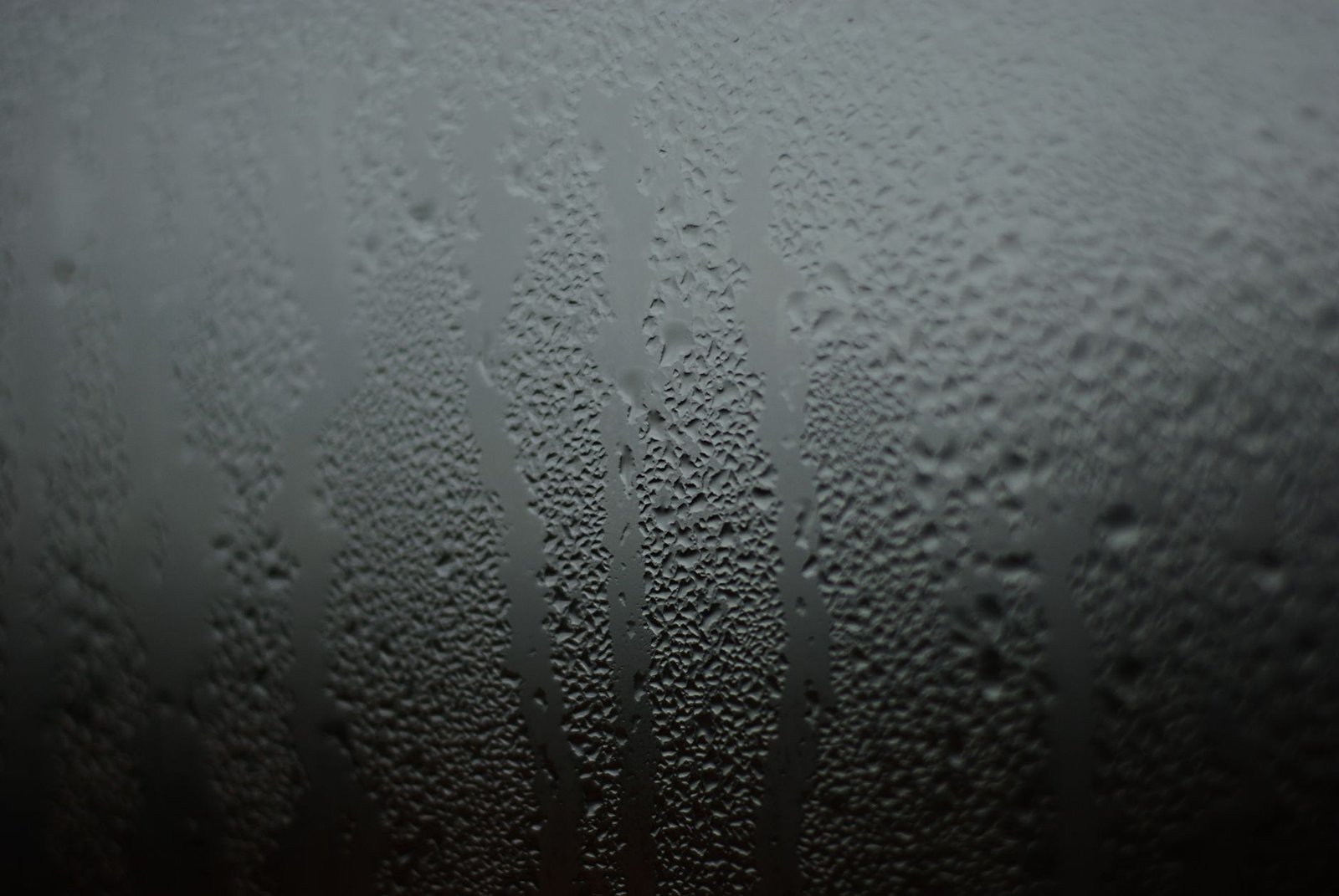
The clearest signal is condensation: water beading on the inside of windows, on cold metal pipes, or on the underside of a toilet tank means the air holds more moisture than the surfaces can shed. A cheap hygrometer settles the question in minutes — anything reading consistently above 55 to 60% relative humidity is worth acting on.
Your senses catch the rest. A persistent musty or earthy smell, especially in a basement or closet, is airborne mold spores. Black or greenish spotting on grout, drywall corners, window frames, or the back of furniture is surface mold that thrives on damp. Peeling paint, blistering wallpaper, cupping wood floors, and doors that suddenly stick in summer all point the same way. Frequent allergy or asthma flare-ups indoors, clothes that never quite dry in a closet, and rust forming on tools or hardware round out the list.
Any two or three of these together justify a dehumidifier. If you also see standing water or damp foundation walls, fix the water source first — a dehumidifier manages humidity, but it will not out-run an active leak or poor drainage.
What size dehumidifier do I need?
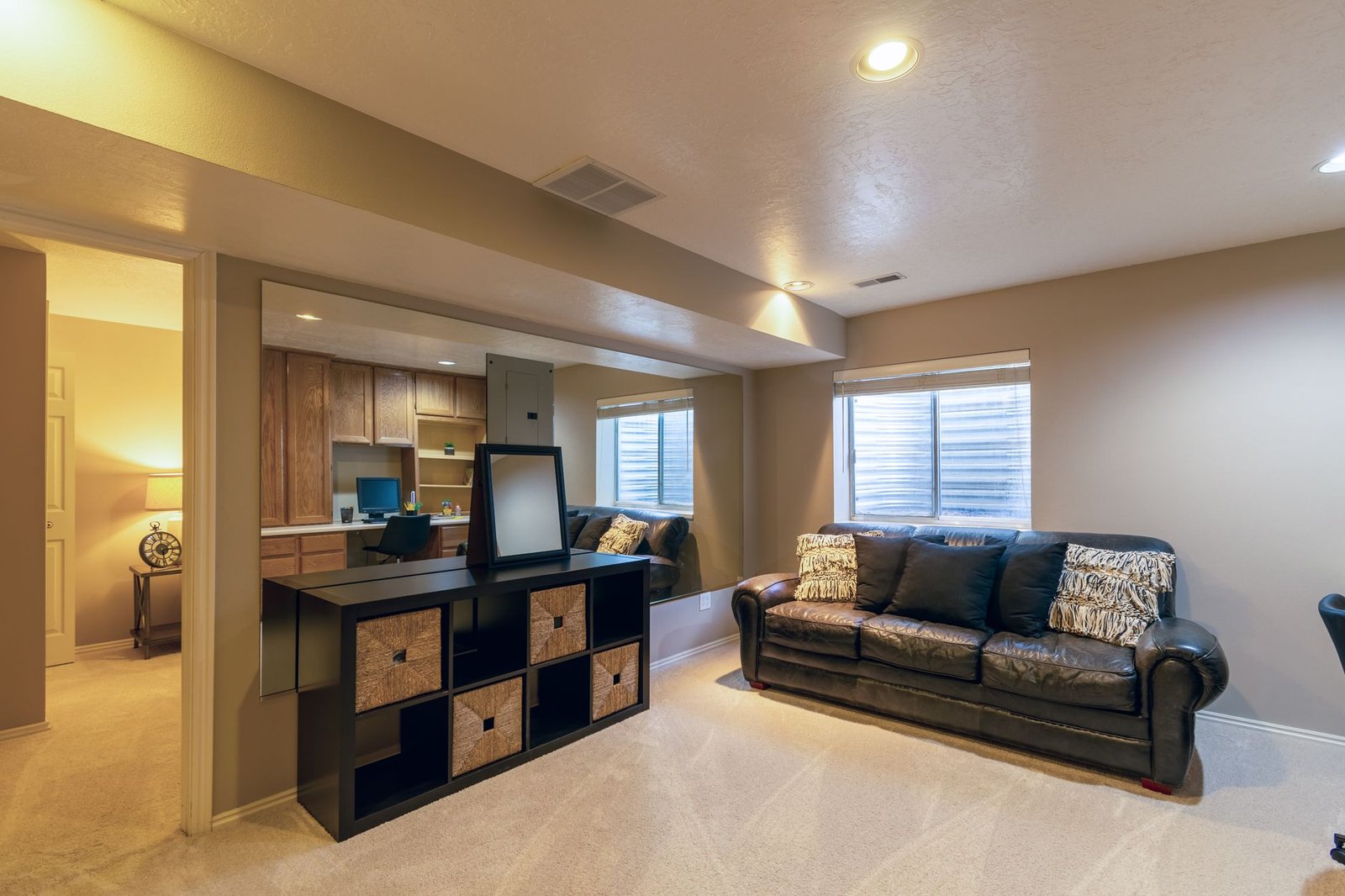
Capacity is measured in pints of water removed per 24 hours. The right number depends on two things: the square footage of the space and how damp it is. “Slightly damp” means the room feels a little muggy in summer. “Very damp” means it always smells musty and you see damp patches. “Wet” means you can see beads of moisture on the floor or walls.
Use the chart below as a practical starting point. The pint figures reflect the current 2019 DOE test rating (explained in the next section), so they will look lower than older units you may remember.
| Room size (and typical space) | Damp / musty (60-70%) | Very damp (70-85%) | Wet (visible moisture) |
|---|---|---|---|
| Up to 300 sq ft (bathroom, closet) | 10 pt | 12 pt | 14 pt |
| 300-500 sq ft (bedroom) | 12 pt | 14 pt | 18 pt |
| 500-800 sq ft (large room) | 14 pt | 20 pt | 22 pt |
| 800-1,200 sq ft (living area, small basement) | 20 pt | 25 pt | 30 pt |
| 1,200-1,800 sq ft (basement) | 30 pt | 40 pt | 45 pt |
| 1,800-2,600 sq ft (large basement) | 40 pt | 50 pt | 50 pt |
Then nudge the number up for real-world conditions. Following ENERGY STAR partner and Home Depot sizing guidance, add roughly 5 pints if several people use the room regularly, another 5 if there are multiple windows or exterior doors, 5 more if a washer and dryer share the space, and about 10 pints if you live in a genuinely humid climate. A slightly oversized unit reaches your target humidity faster and then idles, which is quieter and often cheaper than a small unit running flat out all day.
Why do pint ratings look smaller than they used to?
If you remember 70-pint dehumidifiers and now see mostly 50-pint models, the machines did not get weaker — the test did. In 2019 the U.S. Department of Energy changed the conditions used to rate capacity, dropping the test temperature from 80°F to 65°F. Cooler air holds less moisture, so every unit removes fewer pints under the new protocol. Manufacturers relabeled their products accordingly starting in 2020.
The practical upshot: a modern 50-pint unit is roughly as powerful as a pre-2020 70-pint unit. Here is how the old and new labels line up.
| Pre-2020 rating (80°F test) | 2020+ rating (65°F test) | Approx. coverage |
|---|---|---|
| 30 pint | 20 pint | ~400 sq ft |
| 50 pint | 30 pint | ~800 sq ft |
| 70 pint | 50 pint | ~1,200 sq ft |
This matters most when you shop secondhand or read older reviews. A “70-pint” unit from 2018 and a “50-pint” unit from 2025 are close cousins, so do not assume the older machine is dramatically stronger.
Compressor or desiccant: which type is right for you?
Almost every full-size home dehumidifier is a compressor (refrigerant) model. It works like a small air conditioner: a fan draws humid air over cold coils, water condenses out, and the dry air is reheated slightly on the way out. These are efficient and affordable in warm, humid conditions, and they are the right choice for most basements, laundry rooms, and living spaces.
Compressor units have one weakness — temperature. Below about 60°F their coils can frost over and moisture removal drops sharply. That is why an auto-defrost feature matters in a cool basement, and why a compressor unit is a poor pick for an unheated garage in winter.
Desiccant dehumidifiers solve that problem differently. They pass air over a moisture-absorbing wheel (usually silica gel) with no compressor at all, so they keep working in cold rooms where a refrigerant unit stalls. They tend to be lighter and quieter, but they use more electricity per pint and rarely match a compressor unit’s raw capacity in warm conditions. Choose desiccant for cold spaces — a garage, a boat, an unheated cabin, a cool storage room — and compressor for everything else. A small third category, thermo-electric (Peltier) mini units, removes only a pint or so a day and suits closets, safes, and tiny bathrooms, not whole rooms.
Which features are actually worth paying for?
Specs sheets list a dozen features. A handful genuinely change how the unit fits your life; the rest are noise. Here is what to weigh.
| Feature | What it does | Worth it when |
|---|---|---|
| Built-in humidistat | Reads humidity and cycles the unit on and off to hold a set level | Always — it prevents over-drying and saves energy |
| Continuous drainage | Lets you connect a hose to a drain instead of emptying a tank | Basements and any unit you cannot empty daily |
| Built-in pump | Pushes water upward to a sink or out a window, not just downhill | No floor drain below the unit |
| Auto-defrost | Melts frost off the coils so the unit keeps working when cool | Basements and rooms under ~65°F |
| ENERGY STAR | Certifies the unit is about 20% more efficient than baseline | Any unit that runs for months at a time |
| Auto restart | Resumes your settings after a power cut | Unattended spaces and storm-prone areas |
A larger water tank sounds convenient but only delays emptying — if you will run the unit hard, continuous drainage beats any tank size. Wi-Fi and app control are pleasant extras, not reasons to choose one unit over a better-sized one. Efficiency is expressed as an integrated energy factor in liters removed per kilowatt-hour; a higher number means a cheaper unit to run.
Where should you put a dehumidifier?
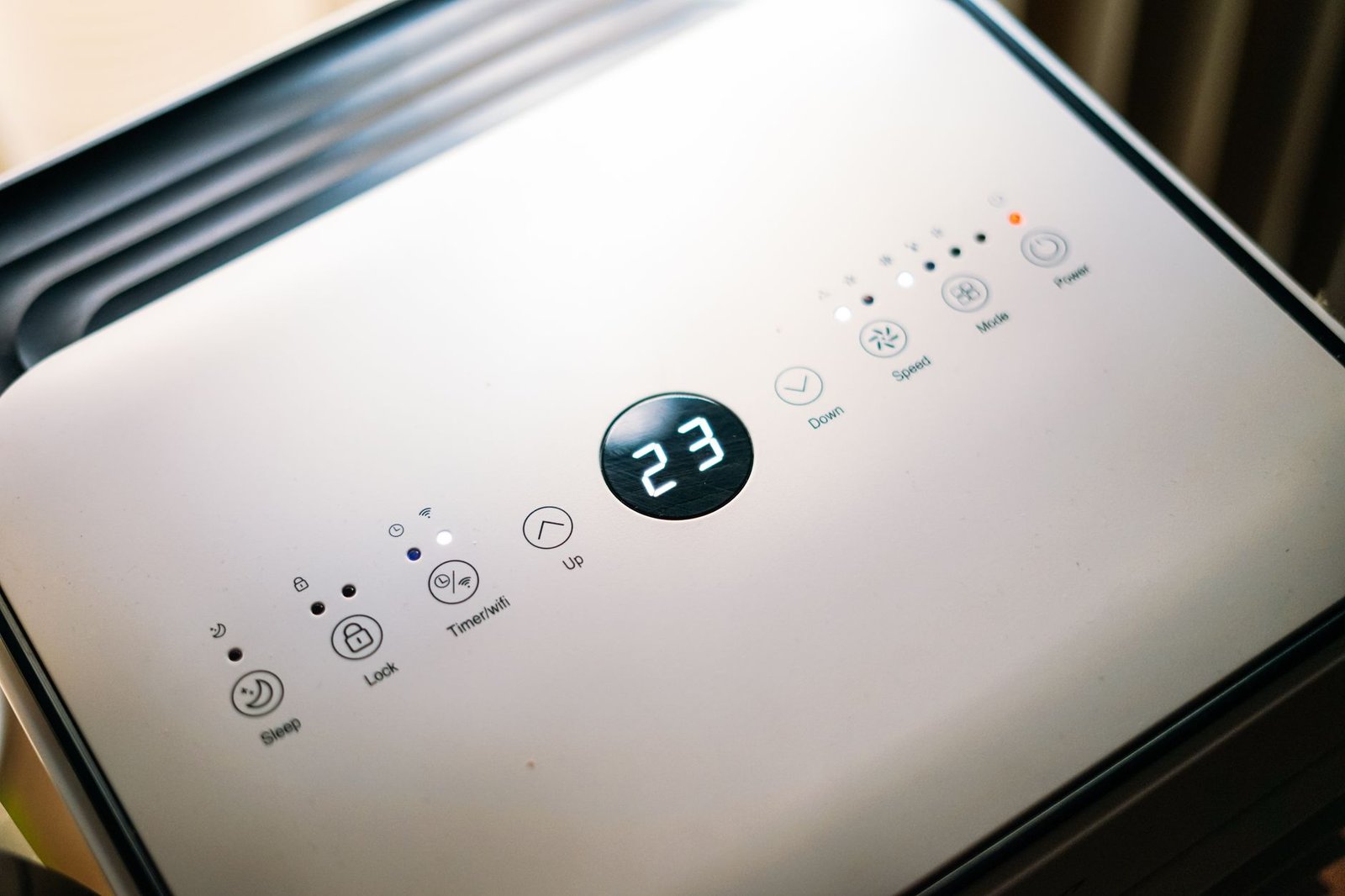
Placement affects results more than most buyers expect. Put the unit near the source of the dampness — the wettest corner of a basement, close to a laundry area, or by the wall where condensation collects. Air needs to move freely through it, so leave clearance around the intake and exhaust; a common manufacturer spec is 6 to 12 inches on all sides, though some newer top-exhaust designs can sit closer to a wall.
Keep doors and windows to the space closed while it runs. A dehumidifier can only dry the air it can reach, and an open door to a humid outdoors or a damp adjacent room turns the job into an endless one. For the same reason, one right-sized unit in a closed room beats two undersized ones spread across an open floor plan.
If you are drying a finished space you use daily, noise and drainage guide the spot: near a floor drain so you can run a hose, and not right beside a sofa or bed where the fan hum will bother you. In a crawl space or a room you rarely enter, drainage matters more than noise, so prioritize a spot where a hose can reach a drain by gravity.
How much does a dehumidifier cost to run?
Running cost is the number buyers underestimate. A dehumidifier is not a light bulb — a mid-size unit draws several hundred watts and can run many hours a day through a humid season. The table below estimates cost at the 2025 U.S. average of about $0.16 per kilowatt-hour, assuming 10 hours of active running per day. Your real cost depends on local rates, how damp the space is, and how tightly the humidistat cycles the unit.
| Capacity (2020 rating) | Typical power draw | Est. per day (10 hrs) | Est. per month |
|---|---|---|---|
| 20 pint | ~300 W | ~$0.48 | ~$14 |
| 35 pint | ~450 W | ~$0.72 | ~$22 |
| 50 pint | ~600 W | ~$0.96 | ~$29 |
Two habits keep the bill down. First, buy ENERGY STAR — the certification exists because the efficiency gap between models is real over a full season. Second, set the humidistat to 50% rather than the lowest setting; each extra step of dryness costs energy for comfort you will not notice. Sealing obvious air leaks and fixing standing-water sources does more for a damp basement than running a bigger machine.
Recommended options for common needs
Disclosure: the links below are affiliate links. If you buy through them we may earn a small commission at no extra cost to you. We only list units that fit the sizing and feature guidance above.
Budget and small-space pick: Vremi 1-Pint Compact Dehumidifier
For a closet, a small bathroom, an RV, or a gun safe, a thermo-electric mini like the Vremi 1-Pint is the sensible, quiet, under-$100 choice. It will not dry a basement, and it is not meant to — it keeps a small, enclosed space from turning musty without the noise or draw of a compressor unit.
Mid-size pick: Vremi 35-Pint ENERGY STAR Dehumidifier
For a bedroom, a medium living area, or a smaller basement up to roughly 1,500 square feet, a 35-pint ENERGY STAR unit hits the sweet spot of capacity and running cost. Look for the humidistat and continuous-drain port, both of which this class of unit generally includes.
Large-space pick: Frigidaire 50-Pint High-Humidity Dehumidifier
For a full basement, a very damp large room, or a humid-climate main floor, a 50-pint unit (the equivalent of an old 70-pint) gives the headroom to reach and hold your target. The Frigidaire FFAD5033W1 offers custom humidity control and a continuous-drain option for hands-off running.
Common mistakes to avoid
Buying by the headline pint number alone. After the 2019 test change, a 50-pint unit is stronger than the label suggests. Size by room and dampness using the chart above, not by the biggest number you can afford.
Undersizing to save money. A too-small unit runs constantly, never quite wins, and often costs more in electricity than a right-sized unit that reaches target and idles. Slight oversizing is the safer error.
Ignoring drainage. A tank that fills every few hours turns a set-and-forget appliance into a daily chore. If the unit will work hard, plan for a hose to a drain — or a built-in pump if the drain is uphill.
Running a compressor unit in the cold. Below about 60°F, a refrigerant model frosts up without auto-defrost. For an unheated garage or winter storage room, choose a desiccant unit instead.
Leaving doors and windows open. A dehumidifier cannot outrun an open door to humid air. Close the space off, or you will run the machine and the meter for nothing.
Chasing the driest setting. Aiming below 40% wastes energy and can make a room feel uncomfortable. Set the humidistat around 50% and leave it.
Key takeaways
- Size by room and dampness, not by the biggest pint number — use the chart, then add capacity for occupants, laundry, and humid climates.
- Modern ratings run lower because of the 2019 DOE test change: a 50-pint unit today equals an old 70-pint one.
- Pick the type to the temperature: compressor for warm and normal rooms, desiccant for cold garages and storage.
- The humidistat and a drainage option are the features most people regret skipping.
- Target 30-50% humidity (under 60% to fight mold), and expect roughly $14-$29 a month to run one in season.
Frequently asked questions
What size dehumidifier do I need for a basement?
Most basements between 1,200 and 1,800 square feet need a 30- to 45-pint unit (2020 rating), moving toward 50 pints if the space is very damp or wet. Measure the square footage, judge the dampness, and use the sizing chart above as your starting point, then add capacity for laundry or a humid climate.
What humidity level should I set a dehumidifier to?
Set it around 50%. ENERGY STAR recommends keeping indoor relative humidity between 30% and 50%, and the EPA advises staying under 60% to limit mold and dust mites. Lower settings waste energy without a comfort benefit for most homes.
Why are dehumidifiers rated lower in pints now?
In 2019 the Department of Energy lowered the test temperature from 80°F to 65°F. Cooler air holds less moisture, so units remove fewer pints under the new test. A current 50-pint model is roughly equal to a pre-2020 70-pint model.
Should I get a compressor or a desiccant dehumidifier?
Choose a compressor (refrigerant) unit for most rooms — they are efficient and affordable in warm, humid conditions. Choose a desiccant unit for cold spaces below about 60°F, such as an unheated garage or winter storage, where a compressor unit frosts up and stops removing moisture.
How much does it cost to run a dehumidifier?
Roughly $14 to $29 a month for a 20- to 50-pint unit at the U.S. average electricity rate, assuming about 10 hours of active running a day. An ENERGY STAR model and a sensible humidistat setting can cut that by around 20%.
Do I need to empty the water tank, or can it drain automatically?
Most full-size units offer a continuous-drain port so you can run a hose to a floor drain and skip emptying the tank. If the drain is higher than the unit, choose a model with a built-in pump, which can push water up and out.
Where is the best place to put a dehumidifier?
Near the dampest spot in the room, with clearance around the air intake and exhaust and the doors and windows kept closed. One right-sized unit in a sealed room outperforms two undersized units in an open, leaky space.
Can a dehumidifier help with mold and allergies?
Yes. Holding humidity below 60% removes the moisture that mold, mildew, and dust mites need to thrive. A dehumidifier will not clean existing mold, but keeping the air dry stops new growth and makes a damp room far less allergen-friendly.
Sources
Our figures draw on the following references, each checked August 20, 2026:
- ENERGY STAR — Dehumidifiers (sizing, humidity, efficiency). Checked August 20, 2026.
- U.S. EPA — Mold and moisture guidance (indoor humidity under 60%). Checked August 20, 2026.
- The Home Depot — How to choose the right size dehumidifier (sizing adjustments). Checked August 20, 2026.
- TCL — Dehumidifier testing standards and pint capacity (2019 DOE conversion). Checked August 20, 2026.
Cleaning and maintenance keep any humidity-control appliance working; the same care applies to other everyday kitchen gadgets. If you are outfitting a small home, our guides to compact appliances for apartments and smart-home buying decisions cover the same ground with the same research-first approach.
Naveen Kumar Durai is the founder of Naveen AI Automation and the editor of TrendifyReview. He writes practical home and kitchen gadget guides from manufacturer documentation, official instructions, and verified owner reports.

